The Business Case for Green Building Technologies

The rapid growth of green building technologies has the potential to transform the current property management landscape. These technologies encompass innovations applied throughout a building’s lifecycle with the purpose of minimizing environmental impact and maximizing resource efficiency.

However, the value of green building technologies goes beyond reducing a building’s environmental footprint. For owners and managers, investments in green solutions can deliver lower operating costs, reduced risk, improved occupant experience, stronger asset value, and greater resilience over the life of the property. From solutions like QEA’s AI-powered building envelope intelligence to low-carbon materials, green building technologies are giving owners increasing ways to improve how their assets perform.

Green Buildings Are a Financial Investment

Green building investments are often evaluated through their environmental benefits such as reduced energy consumption, lower greenhouse gas emissions, reduced water use, or lower embodied carbon. While these outcomes are important, they are only part of the picture.

A green building can reduce recurring operating expenses, improve the reliability and durability of building systems, improve insurability by reducing exposure to climate-related risks, and make the property more attractive to tenants and investors. Over time, these benefits influence both the income generated by an asset and the costs required to operate and maintain it.

As a result, green building investments should be evaluated across multiple financial and operational metrics, including utility costs, maintenance and repair expenses, occupancy and tenant retention, occupant comfort and productivity, rental income potential, asset value and marketability, climate risk exposure, building durability and service of life. Considering these factors provides a more complete picture of the return that green building technologies can deliver.

The Value of Green Buildings Comes from Multiple Sources

Benefits of green building technologies are not one-dimensional. Investment in green solutions provide multiple ways for building owners and managers to create and protect asset value:

Lower Operating Costs

More efficient building components (e.g. building envelopes, HVAC systems) reduce the energy required to operate a building, with the building envelope accounting for approximately 30% of primary energy consumption and heating and cooling accounting for around 35% of total building energy use. Considering approximately 30% of energy used in commercial buildings is wasted, there is major opportunity for building owners to capitalize on efficiency improvements.

Lower energy consumption translates directly into lower utility costs and more predictable operating expenses. Over the life of an asset, consistent annual reductions in operating costs can accumulate into significant financial value. For example, the U.S. Department of Energy reported in 2024 that its Better Buildings partners had collectively achieved nearly $22 billion in energy savings through efficiency improvements since 2011.

Lower Maintenance and Repair Costs

Green building investments can also reduce the frequency and cost of maintenance and repairs. Durable building envelope materials, better moisture management, and efficient HVAC systems reduce premature building component or equipment failure.

In a study of 643 commercial buildings, detailed analysis of several of the buildings found that 46–62% of deficiencies identified during building commissioning would have eventually manifested as higher repair and maintenance costs if left unresolved, while 4–10% of the deficiencies would have shortened equipment life. In one example of four elementary schools, correcting the building deficiencies identified avoided approximately $100,000 in repair costs.

For building owners, leveraging green building technologies to identify and remedy building defects can mean fewer expensive emergency repairs and greater predictability in capital planning.

Reduced Risk

Extreme temperatures, storms, flooding, and other climate-related events can severely damage buildings and disrupt operations. As these climate-related risks become more likely to occur, the ability of an asset to withstand and recover from them becomes an increasingly important consideration.

The financial case for green building technologies that enable climate adaptation is strong, with analysis of federally funded hazard-mitigation projects finding that every $1 invested in mitigation can generate approximately $6 in avoided disaster losses. Further, the Insurance Institute for Business & Home Safety found that retrofitting roofs to a more resilient standard could reduce potential losses from hurricanes and severe storms by 30–50%.

By reducing the likelihood and severity of building failures, resilient building systems can limit damage, avoid expensive repairs, and reduce the operational downtime that follows a major climate disaster. Additionally, energy efficiency and climate resilience can influence perceptions of an asset’s future risk and operating performance. Demonstrating that climate-related risks are being actively managed can strengthen the overall investment proposition of a property.

Tenant Demand and Market Competitiveness

Tenants are increasingly considering operating costs, occupant experience, and building resilience when selecting space. A building that offers lower energy costs, greater comfort, better indoor environmental quality, and greater asset resilience may have an advantage over less green properties.

In CBRE’s 2024 Americas Office Occupier Sentiment Survey, 55% of occupiers stated a building’s green certification could influence whether they would pay a premium, seek a discount, or reject the property altogether, rising to 63% among occupiers with predominantly Class A/A+ portfolios. Additionally, analysis of approximately 20,000 U.S. office buildings found that LEED-certified buildings commanded an average 3.7% rent premium after controlling for factors like location, building age, size, and renovation history. The value of green building technologies therefore extends beyond what they save the owner directly. They can also influence the revenue-generating potential of an asset.

Asset Protection and Long-Term Value

A building is a long-term investment, and its value depends on its ability to continue performing well over time. Building envelope improvements, for example, can help protect from moisture and environmental exposure. Improvements to insulation, air barriers, windows, and roofing systems support asset durability while reducing energy demand. Green building technologies can help protect and improve the physical condition of a building, preserving its functionality and value.

“Soft” Benefits are Business Benefits

Benefits of green building technologies that are often dismissed as intangible can have significant financial implications. Better ventilation, thermal comfort, daylighting, and acoustics can contribute to employee health, engagement, and productivity. For example, a Harvard-led study found that increasing ventilation from 20 to 40 cubic feet per minute per person was associated with an 8% improvement in worker performance, equivalent to approximately US$6,500 in additional productivity per employee per year. Additionally, research involving more than 40,000 employees across 70 office buildings found higher job satisfaction, engagement, and organizational commitment among employees working in green-certified buildings.

Building Envelope Efficiency Is an Operating Investment

Capable of achieving upwards of 30% in energy savings, the building envelope (walls, windows, doors, and roofs) is one of the clearest examples of how sustainability and financial performance intersect. The envelope separates the interior building environment from external conditions and plays a critical role in controlling heat flow, air movement, and moisture.

Envelope improvements—including higher-performing insulation, air barriers, and improved window panes—reduce the amount of energy required to heat and cool a building. These benefits translate directly into lower utility expenditures and, depending on the jurisdiction, lower exposure to carbon costs. For example, an office building that leveraged QEA’s building envelope intelligence to prioritize retrofits achieved a 14% reduction in annual building energy costs after adding cellulose insulation to its walls.

Building Envelope Resilience Is Financial Risk Management

Energy efficiency is only one part of the envelope business case. Resilience is equally important.

A poorly maintained envelope can expose a property to moisture intrusion, condensation, material deterioration, and premature component failure. An analysis of 2,100 building-damage cases found that 20% of damage incidents were associated with building components exceeding their technical service life, particularly roofing and terrace membranes, walls, and doors. Moisture is a particularly important driver of deterioration, causing concrete to crumble, wood to rot, paint to peel, insulation performance to deteriorate, and mold to develop. Even small openings in an envelope can have an impact, with small air leaks letting in significant moisture.

A well-maintained envelope can help reduce these exposures by limiting water intrusion, managing condensation, and slowing component deterioration. The financial value of proactive intervention is particularly evident in roofing: research examining 12 hospital roofs found that preventive maintenance could extend roof service life by up to eight years, reducing the frequency of major replacement decisions.

Green Buildings as a Long-Term Asset Strategy

For building owners, the strongest reason to invest in green building technologies is ultimately not sustainability for its own sake. It is better asset performance.

As building owners face rising operating costs, aging infrastructure, evolving regulations, and increasing climate risks, investments in green building technologies can become an important part of protecting the value of existing assets. When efficiency, resilience, occupant experience, and asset protection are considered together, green building technologies become more than sustainability initiatives—they become strategic investments in the long-term financial performance of the property.

QEA Receives the 2026 Steve Leahy Energy & Innovation Collaboration Award

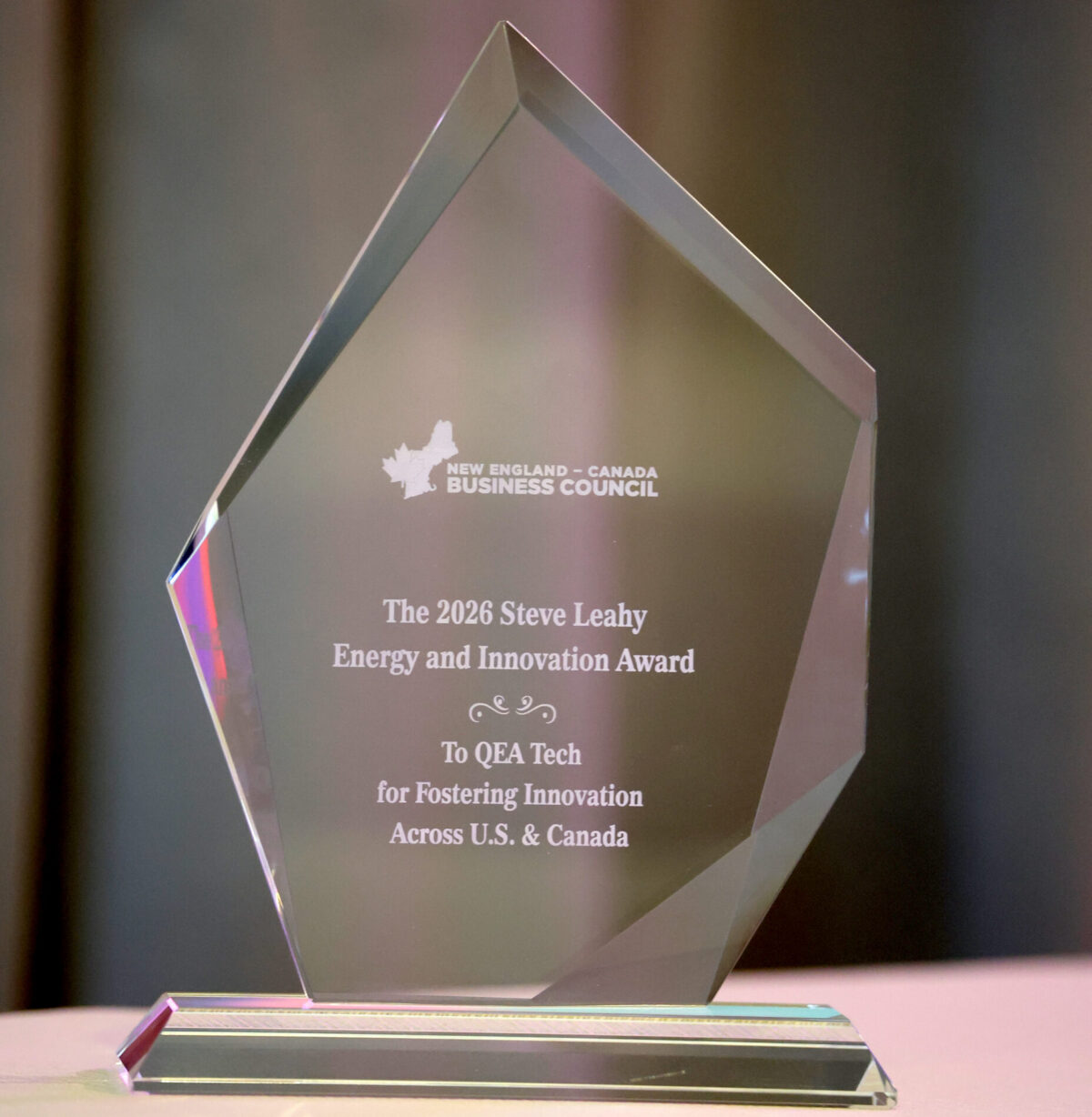
QEA is proud to announce that it has been named the recipient of the 2026 Steve Leahy Energy & Innovation Collaboration Award by the New England-Canada Business Council (NECBC), recognizing its contributions to advancing energy efficiency and sustainable economic development across borders.

The award celebrates U.S.–Canada partnerships that demonstrate innovation, environmental and economic impact, and a commitment to long-term sustainability. Established in memory of Steve Leahy, a respected NECBC board member and energy executive dedicated to strengthening the relationship between Canada and the U.S., the award recognizes organizations that exemplify the power of cross-boarder collaboration in addressing shared energy challenges.

QEA’s U.S. expansion began with projects in New York City, made possible through connections established during its participation in the Canadian Technology Accelerator program. What began as an opportunity to introduce QEA’s solution to a new market has since evolved into the U.S. being the company’s largest international market, with New England in particular playing a pivotal role in its continued growth.

Today, QEA has established a U.S. office in Boston, maintains an active presence at Boston-based climate technology incubator Greentown Labs, and continues to develop relationships with regional building owners and industry partners. These collaborations have enabled QEA to bring its AI-powered building envelope intelligence to more buildings across the U.S., helping organizations identify opportunities to reduce energy waste and accelerate progress toward decarbonization goals.

As rising energy demand, affordability pressures, and ambitious climate targets create new challenges across North America, one thing is clear: energy and climate challenges do not stop at borders, and neither should the solutions. QEA addresses the need for innovative and cost-effective energy efficiency solutions by combining high-resolution drone-based thermal imaging with patented AI analytics to quantify building envelope energy loss, pinpoint deficiencies, and develop ROI-driven retrofit action plans. By providing precise data and measurable financial insights, QEA empowers stakeholders to make informed retrofit investments that deliver greater energy savings, lower operating costs, and improved building resilience.

QEA’s continued growth demonstrates the potential of bringing Canadian innovation to international markets through strong cross-border partnerships. Its success in the U.S. highlights how collaboration connects transformative technologies with regional expertise, industry networks, and market access, accelerating the deployment of solutions that deliver meaningful impact on both sides of the border.

“Receiving the Steve Leahy Energy & Innovation Collaboration Award is particularly meaningful to us because cross-border collaboration has been instrumental in QEA’s growth,” said Peyvand Melati, CEO of QEA. “From our first projects in New York to establishing a strong presence in New England, the relationships we have built with U.S. partners have enabled us to bring our technology to more buildings and help owners take measurable action on energy efficiency.”

QEA extends its sincere appreciation to the NECBC for this recognition and for its continued commitment to fostering partnerships that drive innovation and progress across the North American energy sector.

From Vacant Offices to Viable Housing: Why Building Intelligence Matters in Adaptive Reuse

Office-to-residential conversion has become one of the most talked-about strategies for addressing two challenges at once: persistent office vacancy and housing shortages. The logic is compelling—repurpose underutilized buildings rather than demolishing them and starting over. But there is a fundamental problem with treating conversion as a universal solution: not every office building can become housing.

An empty office building may appear to be an obvious candidate for adaptive reuse but industry research found that across more than 1,300 potential office-to-residential conversions across North America only 25% of the buildings assessed were suitable candidates for conversion.

Before owners spend significant capital on design, approvals and financial modelling, they need to understand whether the existing building can physically support its intended future.

Vacancy Does Not Equal Conversion Potential

In practice when it comes to office to residential conversions, residential building requirements can expose limitations that were less important when the building was designed for commercial use. Floor plate depth, access to daylight, and window configuration can all influence whether effective residential layouts are possible.

The building envelope, the physical separator between the conditioned and unconditioned environment of a building, adds another critical layer to this assessment with existing building facades considered essential when determining the financial feasibility of conversion projects. A façade that was adequate for office occupancy may require substantial rehabilitation or replacement to support a high-performing residential building. Insulation, windows, air leakage, moisture intrusion and thermal bridging all affect resident comfort, energy performance, code compliance and ultimately the cost of bringing the building into its next use.

Building Envelope Intelligence Should Come Before Conversion Investment

Traditional feasibility studies often rely heavily on architectural drawings, visual inspections, and historical documentation. While important, those inputs may not reveal the full story of what is happening across thousands of square feet of façade.

Precise building envelope intelligence can provide a much more granular picture of the physical conditions, energy performance, and residential comfort of an asset before major decisions are made.

For example, QEA combines industrial drones, high-resolution visual and thermal imaging, IoT sensors and patented AI-powered analysis to identify and quantify building envelope deficiencies. Leveraging this data, QEA is able to create targeted retrofit action plans that include details on implementation costs, potential energy savings, and ROI.

For an office building being considered for residential conversion, that level of intelligence can help answer several important questions:

1. What condition is the existing building envelope actually in?

2. Where are the most significant thermal and moisture risks that would impact residents?

3. Which façade components are likely to require intervention?

4. Where could building envelope upgrades materially improve energy performance and occupant comfort?

5. What retrofit measures should be prioritized?

6. What will building envelope investment look like alongside the broader conversion strategy?

Rather than treating the building envelope as an unknown cost in a future renovation budget, owners can gain a detailed understanding of the technical and financial feasibility of converting this critical building component for residential use.

Scalability is Necessary for Determining Adaptive Reuse Strategies

For owners, developers and investors evaluating underperforming office assets with potential for conversion to residential, the challenge is often determining which buildings require further investigation. A scalable approach is needed to efficiently and cost-effectively determine which buildings are suitable candidates for conversion before investing significant resources.

By leveraging technology such as QEA’s, stakeholders quickly gain a comprehensive understanding of building envelope performance across entire portfolios. Stakeholders can identify buildings with significant building envelope investment requirements that may benefit from a different remediation strategy than conversion to residential. That distinction can save owners from spending time and capital pursuing buildings that are not physically viable for a conversion.

Case Study: AI Building Envelope Intelligence to Strengthen Office-to-Residential Conversion Strategy

A portfolio owner leading several office-to-residential conversions leveraged QEA’s building envelope intelligence platform to assess the risks involved in converting one of its office buildings for residential use. Conversion decisions have lots of unknowns and the property owner needed to understand whether the existing building envelope components could support the building’s next use—and, if not, how much intervention would be required.

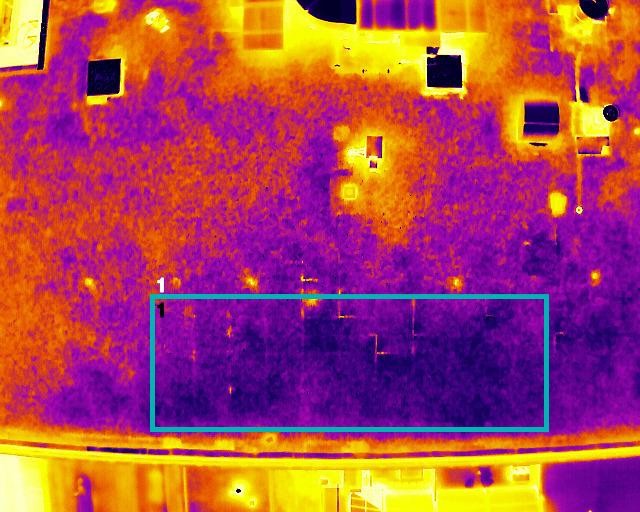
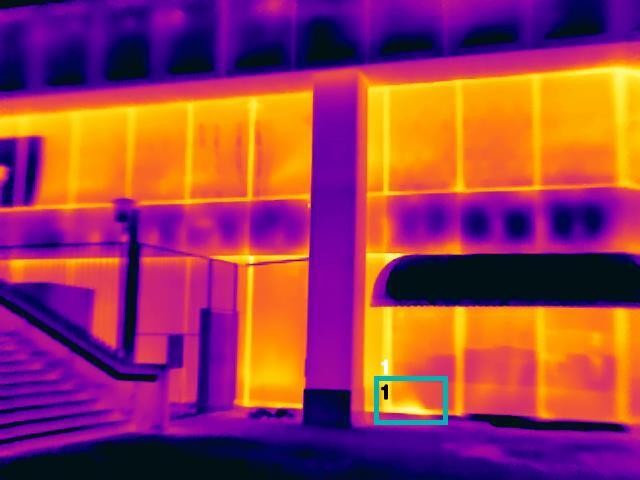
QEA’s analysis provided a detailed picture of building envelope performance, pinpointing and quantifying a wide variety of deficiencies down to inches. For an office-to-residential conversion, understanding factors such as insulation continuity, air leakage, thermal bridging, and moisture penetration is critical to determining what building envelope components can be retained and what may require remediation to support residential use. In this case, key envelope risks included moisture penetration on the roof and air leakage around windows.

Thermal image of a roof that is showcasing moisture penetration.

Moisture Penetration on the Roof

Window Air Leakage

These issues were important to consider as existing moisture problems can become significantly more consequential for a residential space. Moisture penetration can contribute to deterioration of insulation, reduce thermal performance and increase the risk of mold and poor indoor air-quality. These risks are particularly important to address in residential buildings, where consistent thermal comfort and indoor environmental quality are critical. Identifying the source, extent, and severity of moisture intrusion before conversion allows owners to determine whether targeted repairs or more extensive rehabilitation will be required, preventing concealed deficiencies from becoming costly post-conversion issues.

As for window air leakage, uncontrolled air movement through windows creates drafts and localized comfort issues for residents while also increasing heating and cooling demand. By pinpointing specific instances of air leakage, QEA provided the owner with a clear indication of where targeted window upgrades may need to be considered as part of the conversion strategy.

Rather than simply identifying building envelope issues, QEA also measured the effective R-value (thermal resistance) of each building envelope component, determining how components performed in comparison to building code. This was an important insight as the existing office building was likely designed to a different energy code and performance standard than what is required for residential buildings.

Additionally, a measurable 3D model of the building was created, allowing stakeholders to precisely locate deficiencies across the building envelope and visualize where targeted upgrades may be required.

Leveraging these detailed insights on building envelope performance, QEA created a tailored retrofit action plan. To address moisture penetration and energy deficiencies on the roof, QEA recommended removing localized instances of wet insulation and adding spray foam insulation. Spray foam insulation was a financially feasible option, providing a payback period of 4 years. It also provides a continuous thermal and vapor barrier, ensuring there is no path for moisture to enter. To address window air leakage, QEA recommended adding window inserts – customized glass panes that can be placed on the inside or outside of the existing window. These inserts seal drafts and create a new thermal boundary that improves R-values. Window inserts delivered a payback period approximately 4 times better than traditional window replacement.

The Future of Adaptive Reuse Is Data-Driven

Office-to-residential conversion remains an important opportunity in the fight against stranded assets and housing shortages, but it should not be approached as a one-size-fits-all solution.

The strongest candidates will be the buildings where market demand, financial feasibility, and building conditions align.

Understanding the building envelope is an important part of that equation.

Accurate intelligence allows owners to replace assumptions about existing building envelope performance with precise issue and component specific data—helping them understand where deficiencies exist in order to develop more informed capital plans. With this data in mind, building stakeholders can target resources to the most suitable candidates for residential conversion all while ensuring capital for each conversion is optimized.

QEA Named Finalist at NYC Climate Week’s Nest Campus Pitch Competition

QEA, a pioneer and market-leader leader in AI-powered building envelope intelligence, is proud to announce its selection as a finalist in New York City Climate Week’s Nest Campus Startup Pitch Competition. Selected from a competitive pool of more than 10,000 companies, QEA was recognized among a distinguished group of climate technology innovators developing transformative solutions to some of the world’s most pressing environmental challenges.

The largest climate technology event in the US, the Nest Campus brought together 20 companies focused on accelerating the transition toward a more sustainable and resilient economy. Powered by Google Cloud, supported by J.P. Morgan, and organized in partnership with KITE Scouting, the competition provided a large-scale platform for emerging climate technologies to showcase the environmental and economic benefits they bring across infrastructure, climate intelligence, energy, industrial transformation, food, water, nature, and health.

QEA took the stage as part of the Cities, Infrastructure, and Supply Chains cohort, highlighting how its patented AI-powered building envelope intelligence enables building owners and municipalities to translate ambitious sustainability targets into measurable, cost-effective retrofit strategies.

“Our experience at New York City Climate Week reinforced that achieving meaningful progress towards an energy efficient, resilient built environment requires scalable, data-driven action” said Peyvand Melati, CEO of QEA. “Being selected from more than 10,000 companies to present at The Nest Campus is an exciting recognition of the role our technology can play in transforming how cities and building owners understand and improve existing buildings.”

QEA’s participation marked another milestone in the company’s growing presence in New York City and the broader U.S. market. From its early projects in New York to its expanding work with building owners and industry partners across North America, QEA continues to demonstrate how actionable building envelope intelligence can drive meaningful climate resilience globally.

QEA extends its gratitude to The Nest Campus, KITE Scouting, Google Cloud, and J.P. Morgan for the recognition and for creating a platform that celebrates climate innovation.

Better Building Envelopes Strengthen Insurance Risk Profiles

As insurers respond to rising climate-related losses and gain access to more sophisticated asset-level data, the physical condition and resilience of individual buildings are becoming increasingly important to underwriting. For property managers, this creates another reason to understand, document and improve building envelope performance. A resilient, well-maintained building envelope can contribute to a stronger insurance risk profile and, in the right circumstances, better insurance outcomes.

Importantly, resilience measures do not automatically translate into lower premiums. Insurance pricing depends on many factors. But demonstrating that a property is proactively reducing its exposure to climate-related losses can impact insurers willingness to quote, deductible amounts, and coverage terms.

Climate Resilience Is Becoming an Insurance Issue

The connection between building performance and insurance is becoming more significant as climate-related losses increase. Flooding, wildfire, extreme heat, hail, wind and severe storms are increasingly incorporated into property risk assessments. In markets exposed to severe climate scenarios, property managers may encounter higher deductibles, reduced insurance capacity, or more restrictive coverage and the response cannot simply be to shop for another insurer.

Insurance Is Becoming More Building-Specific

Commercial property underwriting relies on the COPE (Construction, Occupancy, Protection and Exposure) framework which details physical building attributes that improve insurability:

Construction: Considers characteristics such as the quality and fire-resistiveness of building materials.

Occupancy: Accounts for how the property is used and the hazards associated with those operations. For example, an office tower has a lower occupancy hazard than an industrial waste disposal plant.

Protection: Includes measures such as sprinkler systems, alarm systems for wear and tear on equipment, and building maintenance programs.

Exposure: Considers external risks, including neighbouring properties, proximity to water, climate conditions and whether a property is located in an urban, rural or remote environment.

Those fundamentals remain important. What is changing is the level of detail available to insurers.

Underwriters increasingly have access to catastrophe modelling, GIS-based property information, climate models and AI-generated actuarial data. Instead of relying as heavily on historical portfolio averages, insurers can evaluate risks at the individual asset level.

A building’s precise location, building envelope characteristics, exposure to severe weather, flood susceptibility and other physical attributes can increasingly contribute to its risk profile. For property managers, this means two otherwise similar buildings may produce very different insurance outcomes based on how well each has identified and mitigated its vulnerabilities. Property managers need to demonstrate how their buildings have been adapted to the risks associated with its location. Depending on the property, this could include hail or wind-resistant roofing, non-combustible materials and upgrades to vulnerable building envelope assemblies.

This represents an important shift in capital planning. The question when considering building maintenance becomes not simply, “How much will this upgrade save?” but “What risks will this investment remove from the asset?”.

The Building Envelope Is at the Front Line of Loss Prevention

The building envelope acts as the barrier separating the conditioned interior from the exterior environment, and is therefore directly exposed to many of the climate hazards becoming more important to insurers.

Climate hazards such as flooding and severe storms can worsen building envelope weaknesses that may initially be difficult to see. A roof defect can allow water to seep into the building, damaging equipment, disrupting tenant operations, and creating environments for mold growth. Small cracks on the wall can lead to moisture intrusion and potentially parts of the building façade falling. Deferred building envelope maintenance can cause relatively minor deficiencies to develop into substantially larger problems, making building envelope performance important to insurance and risk management.

From Reactive Repairs to Documented Risk Reduction

Insurers will reward evidence of effective risk management more than statements of intent. A property manager saying that a building is “well maintained” provides limited underwriting information. A manager who can demonstrate when the building envelope was assessed, what deficiencies were identified, which repairs were completed and how conditions are being monitored provides tangible evidence of effective risk management practices.

This is where proactive building envelope assessments can play an important role. For example, QEA’s building envelope intelligence platform efficiently scales across large building portfolios, pinpointing the exact location of a wide variety of building envelope risks and helping property owners identify deficiencies before they develop into costly problems. QEA also ranks these issues by severity and provides actionable retrofit recommendations to address specific building envelope needs.

By identifying areas that warrant further investigation or corrective action, assessments such as QEA’s establish a clearer picture of asset condition and support informed maintenance and capital planning. Repeating assessments over time can also provide evidence that identified risks are being actively managed rather than deferred. This documentation can become part of a broader risk-management package presented to brokers, insurers, lenders and investors.

Climate Related Policies Are Raising Expectations for Better Data

The regulatory environment is reinforcing this movement toward better climate-risk information. For example, Canada’s climate-risk and sustainability reporting landscape is increasing expectations for organizations to understand and document climate risks. For insurers, OSFI’s Guideline B-15 establishes expectations around the governance and management of climate-related financial risks. The guideline requires federally regulated financial institutions to report on Scope 1-3 GHG emissions and achieve:

Financial Resilience: Institutions must remain financially and operationally resilient through severe climate risk scenarios.

Governance and Accountability: Institutions require a governance structure that holds senior management accountable for climate risk management.

Risk Management Integration: Institutions are required to incorporate climate-related risks into their business models and strategies.   

If insurers do not comply with these guidelines, they face costs such as being barred from accessing industry level insurance data, restrictions placed on the type and size of business they can write, and financial penalties.

For insurers with large building portfolios, proving climate risk management is a significant task. As a result, many insurers are offloading the task to property managers, requiring them to compile the data needed to meet guidelines.
Property managers who already maintain credible records of building envelope conditions, resilience improvements, preventative maintenance and capital investments will be better positioned to accommodate increasingly stringent climate regulations.

A Practical Risk-Reduction Strategy for Property Managers

Climate risk resilience is no longer optional for property managers to consider, it determines whether assets are insurable, financeable, and competitive.

The strongest approach to risk reduction brings insurance, maintenance and capital planning together rather than treating them as separate exercises.

Property managers can start by understanding their property’s COPE characteristics and location-specific climate exposures. From there, they can assess the condition of critical systems—including the building envelope—and identify vulnerabilities before significant losses occur. Managers should also maintain records of assessments, completed repairs and upgrades.

The result is a stronger narrative supported by evidence: we understand this building’s risks, we know where its vulnerabilities are, and we are actively reducing them.

QEA Selected for USGBC California’s 2026 Net Zero Accelerator

QEA is proud to announce it was chosen from a competitive pool of applicants for the 2026 USGBC California Net Zero Accelerator, joining an international cohort of companies advancing practical, scalable solutions to improve efficiency and resiliency within the built environment. This milestone marks an exciting step in QEA’s continued growth across the US and California specifically, supporting the expansion of its patented building envelope intelligence in one of North America’s most influential markets for sustainable building innovation.

Organized by the U.S. Green Building Council California, the Net Zero Accelerator is designed to bridge the gap between ambitious green building policies and actual adoption of transformative property technologies. The accelerator connects green building solutions with industry leaders to accelerate market adoption, facilitate projects, and drive measurable environmental impact.

As California advances its building decarbonization goals, translating climate commitments into action is increasingly critical. However, building owners face challenges in determining where to invest capital, which improvements will deliver the greatest impact, and how to prioritize building upgrades across large portfolios. QEA’s patented AI-powered building envelope intelligence tackles these challenges, delivering measurements of building envelope energy loss, precise identification of issues and risks, and ROI-driven retrofit plans that allow for budget optimization and repair prioritization.

Through the accelerator, QEA will strengthen its connections with California’s leading real estate owners, property managers, utilities, and public-sector stakeholders. With access to industry advisors, strategic market insights, and potential project partners, QEA aims to support California’s building owners in translating ambitious sustainability goals into measurable building performance improvements.

“California is at the forefront of advancing green building practices, but achieving decarbonization and resiliency at scale requires making retrofits more accessible and financially compelling,” said Justin Kim, VP of Growth at QEA. “Joining the Net Zero Accelerator is an exciting opportunity to collaborate with industry leaders who share QEA’s vision of transforming how buildings are assessed and maintained. By providing the quantified data needed to make smarter retrofits, we aim to help California’s building owners turn sustainability commitments into tangible savings.”

QEA looks forward to collaborating with the Net Zero Accelerator network to drive progress towards more resilient and energy efficient buildings.

QEA Selected for MaRS Better Buildings Adoption Accelerator 2026 Cohort

QEA is proud to announce that it was selected to join MaRS Discovery District’s 2026 Mission from MaRS: Better Buildings Adoption Accelerator, joining a cohort of six Canadian ventures advancing innovative solutions to address sustainability challenges across the residential sector.

Supported by the Peter Gilgan Foundation, the accelerator focuses on supporting technologies that reduce emissions, improve affordability and extend the lifespan of residential buildings. Through industry partnerships, mentorship, market insights, and connections to potential customers and investors, the program aims to accelerate the widespread adoption of innovations that can have a significant impact on addressing the Canadian housing shortage and ambitious climate targets.

With 47% of Canadian built sector emissions attributed to residential buildings and almost half of Canada’s housing stock being over 60 years old, implementing retrofits that improve the performance of existing buildings is critical to creating a more sustainable and affordable housing sector.

QEA’s AI-powered building envelope intelligence tackles this, enabling targeted, cost-effective retrofits that allow for optimal energy-efficiency and resiliency. By pinpointing building envelope deficiencies, quantifying energy loss, and detailing custom retrofits that deliver the greatest return on investment, QEA helps housing providers reduce energy consumption, carbon emissions, and operating costs. QEA’s data-driven insights enable more effective allocation of capital towards repairs that increase energy efficiency and extend the lifespan of aging residential buildings.

By making it more cost-effective to maintain and upgrade existing residential buildings, QEA helps preserve critical housing supply, prevent the loss of affordable units, and reduce pressure on new housing construction. With experience across more than 1500 projects, including several multi-unit residential properties, QEA is well-positioned to support the sector’s evolving sustainability and affordability needs.

“Addressing Canada’s housing and climate challenges requires us to make better use of the buildings we already have. At QEA, we’re focused on making building envelope retrofits more accessible, measurable, and financially viable. Through the Better Buildings Adoption Accelerator, we’re excited to work with MaRS and industry partners to bring these capabilities to more residential properties.” Justin Kim, VP of Growth at QEA.

QEA looks forward to collaborating with MaRS, industry partners, and fellow innovators to accelerate the adoption of impactful solutions for the residential sector. This opportunity represents another step in QEA’s journey toward making actionable building envelope intelligence accessible at scale, enabling smarter retrofits for buildings in Canada and globally.

QEA Wins Tomorrow.City USA Pitch Competition

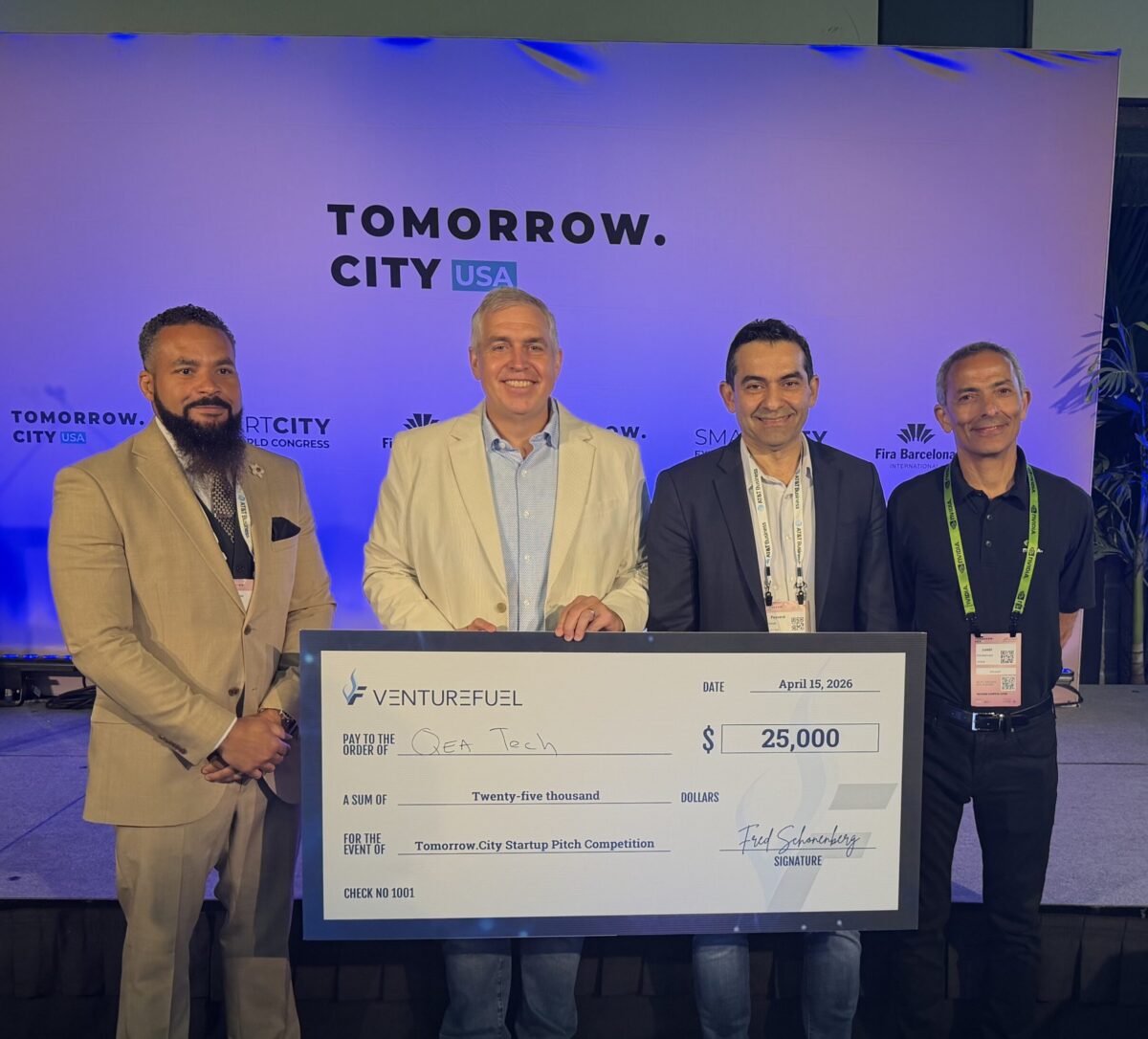
QEA is proud to announce that it has won the Tomorrow.City USA Startup City Pitch Competition, powered by VentureFuel, recognizing the company’s innovative approach to improving building performance across cities and advancing sustainable urban development.

Tomorrow.City USA brought together city leaders, investors, innovators, and built environment experts to explore solutions shaping the future of urban development. The event’s Startup City Pitch Competition featured eight semi-finalists developing technologies that address pressing urban challenges, spanning infrastructure, energy, mobility, and community well-being.

QEA CEO, Peyvand Melati, took the stage to showcase the company’s patented AI-powered building envelope intelligence, demonstrating how precise and actionable envelope data can help cities overcome one of the greatest barriers to large-scale decarbonization: identifying where to invest for the greatest energy consumption, cost, and emissions reductions. Emerging as the winner from a competitive pool of companies, QEA demonstrated the potential of AI-driven building envelope analytics to drive progress towards sustainable, resilient, and energy-efficient cities.

As cities face mounting pressure to reduce emissions, improve energy efficiency, and strengthen climate resilience, access to reliable building performance data is becoming increasingly critical. With potential energy savings exceeding 30% and more than $60 billion in annual savings opportunities, improving building envelope performance represents a significant opportunity to advance sustainability goals.

QEA is helping cities unlock this potential through its innovative combination of drone-based thermal imaging and patented AI analytics. By precisely measuring building envelope energy loss and forecasted savings, identifying hidden deficiencies and risks, and developing ROI-driven retrofit strategies, QEA provides cities with the data needed to prioritize investments and maximize energy and cost savings.

QEA’s scalable, non-intrusive approach is particularly useful for cities as it allows for large building portfolios to be assessed efficiently, providing cities with a clear roadmap on how to systematically improve building performance while optimizing limited capital resources.

“Winning the Tomorrow.City USA Startup City Pitch Competition is an exciting milestone for QEA and a strong validation of the role that AI-powered building envelope intelligence can play in shaping more sustainable cities. As cities work to meet ambitious decarbonization goals, access to actionable building performance data is critical to driving meaningful progress. This recognition reinforces the growing need for innovative, data-driven solutions in transitioning toward more energy-efficient and resilient cities.”

— Peyvand Melati, CEO, QEA

QEA extends its appreciation to Tomorrow.City USA and VentureFuel for providing a platform to showcase cutting-edge technologies and foster meaningful connections between innovators, investors, and municipal leaders.

QEA Named Finalist for Scale-Up Venture of the Year at the 2026 Canadian Cleantech Awards

QEA is proud to announce it was selected as a finalist in the Scale-Up Venture of the Year category at Foresight Canada’s 2026 Canadian Cleantech Awards.

Presented by Foresight Canada, the nation’s largest cleantech accelerator, the Canadian Cleantech Awards celebrate the country’s leading innovators, adopters, and ecosystem supporters driving sustainable economic growth and accelerating the transition to a net-zero future. The Scale-Up Venture of the Year category recognizes Canadian cleantech companies positioned to effectively accelerate the adoption of transformative technologies that deliver meaningful, sustainable impact.

QEA was selected as one of five finalists in the category, recognizing its contributions to advancing energy efficiency across Canada’s diverse built environment through its precise, actionable building envelope intelligence solutions.

Buildings remain a major contributor to energy consumption and greenhouse gas emissions. Despite building envelopes allowing for upwards of 30% in energy savings, limited action is taken to improve envelope performance. QEA is changing this, transforming how stakeholders understand building envelope performance and implement retrofits. Combining high-resolution drone-based thermal imaging with patented AI analytics, QEA accurately quantifies energy loss, pinpoints building envelope issues and risks, and delivers customized, ROI-driven retrofit plans.

With more than 1,500 projects completed globally, QEA continues to expand the reach of its technology, helping stakeholders across residential, commercial, institutional, and industrial portfolios transition toward more energy-efficient building operations. QEA’s growing impact demonstrates the potential for Canadian-developed innovations to address complex building performance challenges at scale.

The recognition from Foresight Canada reinforces QEA’s commitment to translating innovation into measurable environmental and financial benefits within the built environment while also supporting Canada’s leadership in the global cleantech sector. QEA extends its gratitude to Foresight Canada for recognizing QEA’s commitment to advancing sustainable innovation and for celebrating Canadian companies moving the cleantech economy forward.

QEA Featured in Proptech Collective’s 2025 Proptech in Canada Report

QEA is proud to announce its inclusion in Proptech Collective’s annual Proptech in Canada Report, recognizing the company as part of Canada’s growing ecosystem of innovators transforming the real estate and construction industries.

The report provides a comprehensive overview of the Canadian proptech landscape, highlighting emerging technologies, market trends, investment activity, and companies driving innovation across the built environment. Tracking more than 590 Canadian proptech companies, the report demonstrates the continued growth of an industry increasingly focused on delivering new solutions to longstanding challenges in real estate and construction.

QEA is featured in the report’s Commercial Market Map under the “Energy Management & Sustainability” category, alongside other solutions advancing energy efficiency. The inclusion highlights how QEA is shaping the future of smarter, data-driven building retrofits that maximize energy savings.

A key theme throughout this year’s report is the growing role of AI in transforming the Canadian proptech landscape. Companies are increasingly leveraging AI to improve building operations and optimize resource management, as AI-driven solutions move beyond emerging potential toward real-world implementation.

For QEA, the AI transformation is already underway. Through its patented AI-powered building envelope intelligence, QEA is redefining how stakeholders understand building performance and plan improvements. By measuring actual building envelope energy performance and identifying targeted energy-savings opportunities, QEA enables built environment stakeholders to move beyond superficial building assessments toward ROI-driven retrofit planning. Surpassing 1000 projects completed in 2025, QEA continues to demonstrate the value of scalable, AI-powered analytics in enabling resilient, energy-efficient and high-performing buildings. QEA is honoured to be featured among companies driving tangible progress across Canada’s real estate and construction sectors and extends its appreciation to Proptech Collective for its recognition of QEA’s technology.