Managing Risks and Unlocking Energy Efficiency for a Large Warehouse

To improve energy performance and overall maintenance, an expansive network of warehouses sought QEA’s services to conduct a comprehensive envelope audit for its facilities. With numerous facilities globally, the client faces the ongoing challenge of maintaining a highly distributed network of buildings. Many of these facilities are leased, with terms that require landlords to address infrastructure and envelope issues. However, considering each facility spans hundreds of thousands of square feet, physical inspections to determine envelope issues and energy loss is a challenge.

The client was seeking a scalable solution to pinpoint issues and areas of energy loss across building envelopes, allowing for targeted, cost-effective retrofits. Due to the importance of operations inside the warehouses, issues such as moisture infiltration and excessive energy loss could be catastrophic to the business and are critical to mitigate. Given these circumstances, the client wanted a cutting-edge, innovative solution that could deliver detailed insights without disrupting operations.

Why QEA? Speed, Scale and Precision

The client selected QEA for our unique ability to provide precise, quantified analysis for the entirety of the building envelope while being fast and scalable. Drone operations necessary to collect data for analysis took only a few hours for each facility. QEA provides exact data on energy loss, predicts energy savings for each envelope component, and diagnoses a range of envelope issues down to inches, enabling us to deliver customized, ROI-driven retrofit action plans. Gaining this level of unparalleled detail in a scalable manner enabled the client to make informed decisions that save energy, reduce emissions, and improve operational resilience.

Facility Example: A Deeper Look at Envelope Performance

Coordinated Execution Across an Expansive Facility

A detailed pre-flight plan was developed to guarantee comprehensive coverage of the >1 million square-foot building. Our team captured >6200 high-resolution thermal and visual images of the building and >4500 additional data points necessary for accurate analysis. This data was then analyzed by our proprietary AI software and Building Science team.

Insights into Energy Savings

QEA’s findings revealed significant inefficiencies across the building envelope, with various opportunities to improve energy performance. Key findings include:

1. 59% of annual energy loss in megawatt-hours (MWh) can be saved if the envelope is upgraded to meet building code.

2. >$400,000 USD in annual energy costs can be avoided if the envelope is retrofitted to meet building code.

3. 40% reduction in annual tons of carbon dioxide equivalent (tCO2e) is possible if the envelope is improved to meet building code.

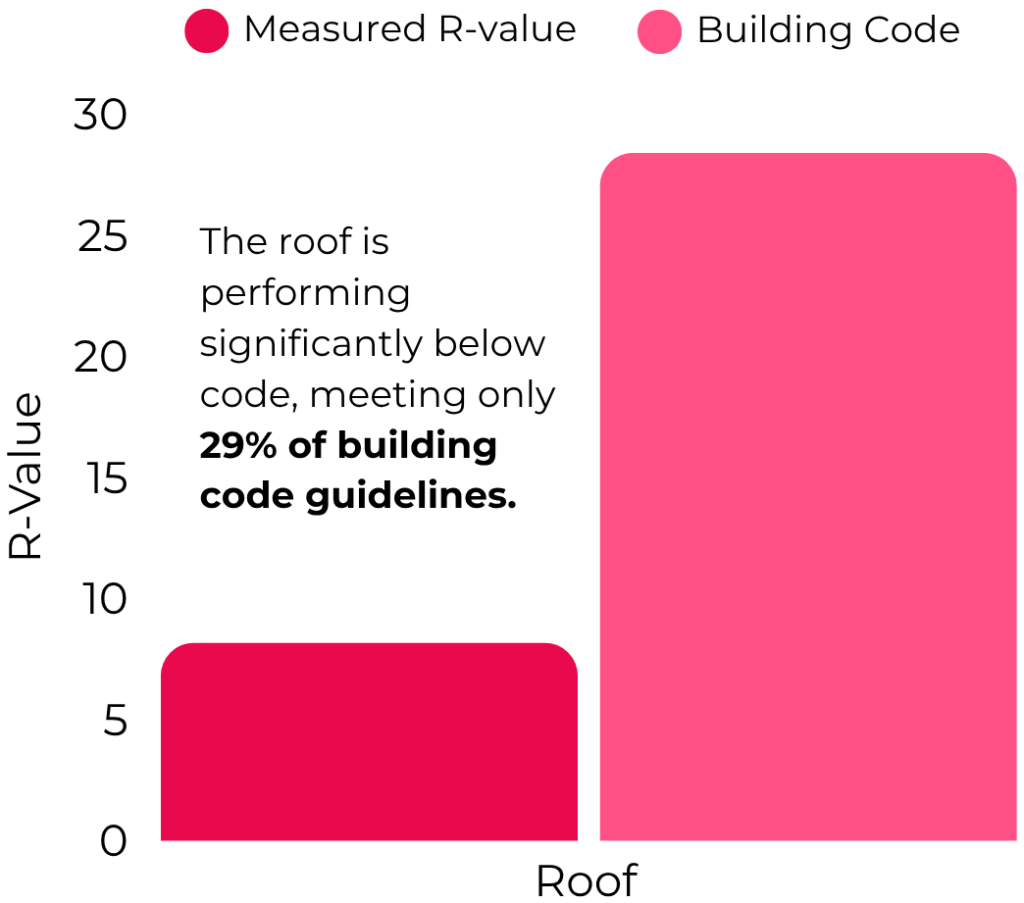
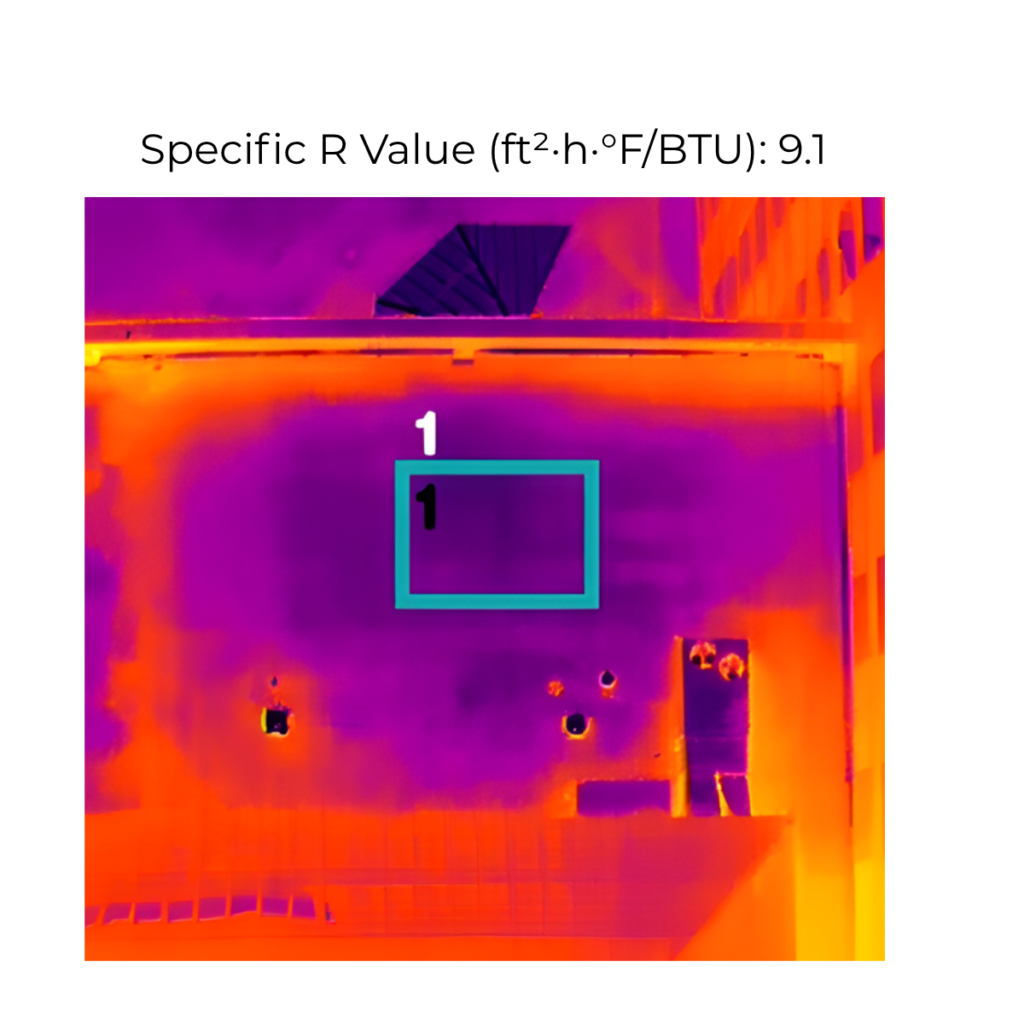
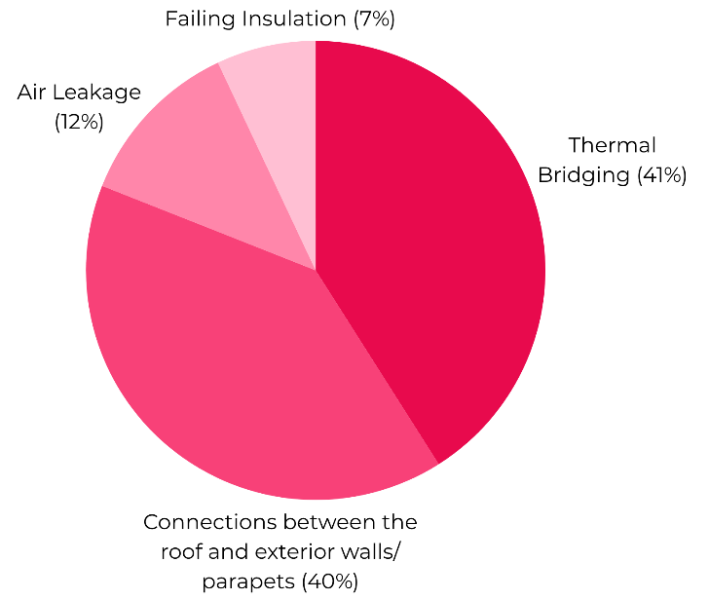
The roof emerged as the weakest link in the building envelope, performing at only 50% of building code guidelines. Energy loss throughout the roof was largely caused by:

1. Thermal bridging

2. Air leakage

3. Failing insulation

4. Connections between the roof and exterior walls/ parapets

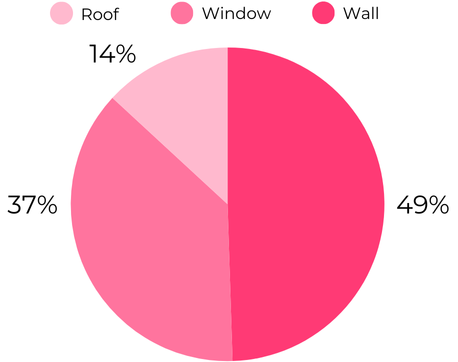
Proportion of Energy Loss Caused by Various Roofing Issues
Air Leakage: A Leading Cause of Energy Loss throughout the Envelope

In general, air leakage was a primary reason for energy loss across the warehouse, effecting all building envelope components (walls, windows, doors, and the roof). Air leakage through the building envelope refers to the unintended flow of air in and out of a building due to gaps, cracks, or openings in its walls, windows, doors, and roof. This leads to significant energy loss, increased heating and cooling costs, and reduced indoor air quality. Instances of air leakage that were of most concern to the client were cases of air leakage around garage and docking doors, and air leakage from skylights.

A Targeted Retrofit Plan: Smart Solutions for High-Impact Areas

QEA created a tailored retrofit plan focused on key areas of concern.

Air Leakage from Skylights

QEA identified 316 skylights across the warehouse and determined that air exfiltration around skylights resulted in 490,236 kWh/year of energy loss and $85,000 USD/ year in energy costs. In order to cost-effectively reduce this energy loss QEA recommended the following low payback solutions:

Silicone Sealant – Designed to create tight barriers around skylights. It is flexible, durable, and provides strong adhesion to various materials.

Payback Period: 3 months

Multi-Surface Sealant and Adhesive – Designed to bond and seal to various surfaces without the need for priming.

Payback Period: 3 months

Weather Tape – Foam strips with adhesive backing that can be applied directly to the skylight frame. This provides a seal against air infiltration and is suitable for mild to moderate weather conditions.

Payback Period: 5 months

Flashing Tape – A waterproof, self-adhesive tape designed to create an airtight seal between the skylight and roof.

Payback Period: 8 months

Air Leakage from Garage and Docking Doors

The warehouse has 59 doors, 44 of which are equipped with inflatable shelters. QEA discovered that many of the inflatable shelters did not fully seal, resulting in significant energy loss due to uncontrolled air infiltration.
A single 10-inch square hole in a dock shelter resulted in 156,017 kilowatt-hour (kWh) per year of energy loss, leading to an annual cost of $25,000 USD.

To tackle this issue, QEA recommended that the client applies either one of the following solutions to garage and docking doors with unsealed inflatable shelters:

Air curtains – These are devices that blow a controlled stream of air across an opening to the other side to create an air seal. This helps to contain heated or conditioned air inside a building.

Weather stripping seals – These are materials that are wrapped around doors to keep out air and debris. They are a cost-effective, long-lasting solution for sealing air gaps, helping to maintain energy efficiency and comfortable indoor environments.

Threshold seals – These are strips of rubber that seal the gap between a door and the door frame or floor. Threshold seals create airtight barriers, keeping energy costs down and helping to prolong a door’s life.

A Clear Path to Energy Efficiency and Operational Resilience

QEA’s detailed envelope analysis provided the client with the precise data and insights needed to take informed action, allowing for the implementation of cost-effective, targeted retrofits. Our use of drones and AI to collect and analyze data enabled us to easily scale across the large facility, provide key insights efficiently, and avoid disruptions to important business operations. By quantifying energy loss, pinpointing specific issues, and offering a customized, practical retrofit roadmap, QEA’s innovation driven approach is enabling the client to tackle crucial issues related to energy loss and physical risks, ensuring the facility remains in optimal condition for future operations.

Interested in better understanding the performance of your building envelope? Contact QEA for a free quote on our data-driven building envelope audit.

Comparing Energy Efficiency Across Multiple Hospital Wings

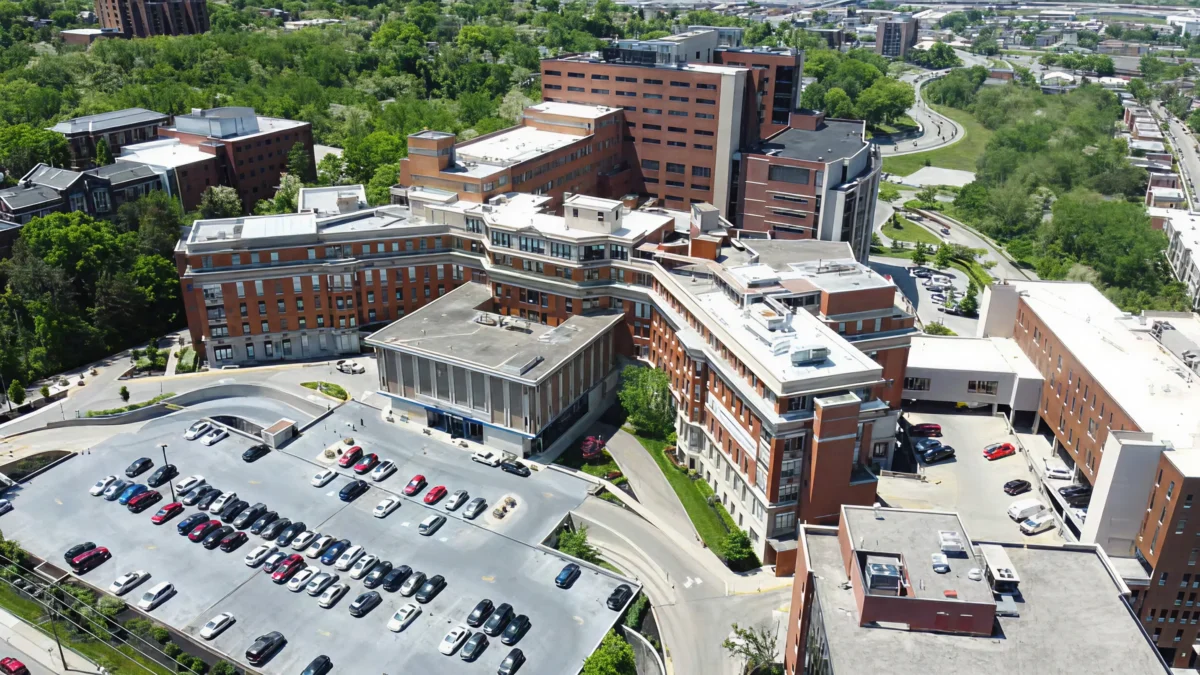
Reliable and efficient building performance is critical for healthcare facilities in ensuring optimal comfort and safety for staff and patients. A prominent full service, acute care hospital that treats over 50,000 patients annually, sought QEA Tech’s services to evaluate the performance of all four of its hospital wings, spanning 234,892 square feet. Serving a population of over 800,000 residents, the Hospital is committed to providing exceptional healthcare and environmental sustainability.

With this commitment in mind, QEA Tech conducted building envelope audits for three of the hospital wings, subsequently conducting an audit for the fourth wing after it had completed renovations. The Hospital was particularly interested in QEA Tech’s ability to pinpoint envelope issues down to inches, simplifying the retrofit planning process by providing exact, measurable identification of where action is needed. Additionally, the Hospital had concerns over pieces of bricks falling in certain areas, further emphasizing the need to assess the building’s envelope.

Audit of the Unrenovated Hospital Wings

QEA Tech’s audit of the three unrenovated wings found notable energy loss across the building envelope. Walls and roofs were a significant area of concern, with the walls and roofs in some wings performing at only 27% and 19% of building code guidelines respectively.

QEA Tech’s audit found that across the three wings:

1. 56-79% of annual energy loss in megawatt hours (MWh) is preventable

2. Over $150,000 in annual energy costs can be saved

3. 32%-45% of annual tons of carbon dioxide equivalent (tCO2e) can be avoided

Heat loss through window frames and inconsistent insulation were the most prevalent issues identified. Heat loss through window frames occurred when frames made from highly conductive materials allow heat to bypass the glazing and insulation around the frame. Inconsistent insulation was a result of inadequate coverage, deterioration due to water intrusion, or aging insulation. Energy loss caused by these issues resulted in higher operational costs as well as discomfort for hospital patients and staff, confirming the need for higher performing building envelope materials.

Assessment of the Renovated Wing: Highlighting the Value of Retrofits

After seeing the insights provided by QEA Tech’s audit of its unrenovated wings, the Hospital completed an audit of its newly renovated wing to verify the impact of retrofits made. The Hospital had made renovations in an effort to reduce energy costs and consumption of aging infrastructure. Renovations made include changing select windows to windows with more efficient glazing and frames, recladding the roof, and adding higher performing insulation and new cladding to the walls. These renovations proved to have a significant impact on energy efficiency:

1. Annual energy loss (MWh) for the envelope decreased by 53% compared to average energy loss across unrenovated buildings.

2. Energy loss (MWh) as a result of heat loss through window frames reduced by 57% compared to average energy loss across unrenovated buildings.

3. Energy loss (MWh) as a result of inconsistent insulation decreased by 93% compared to average energy loss across unrenovated buildings.

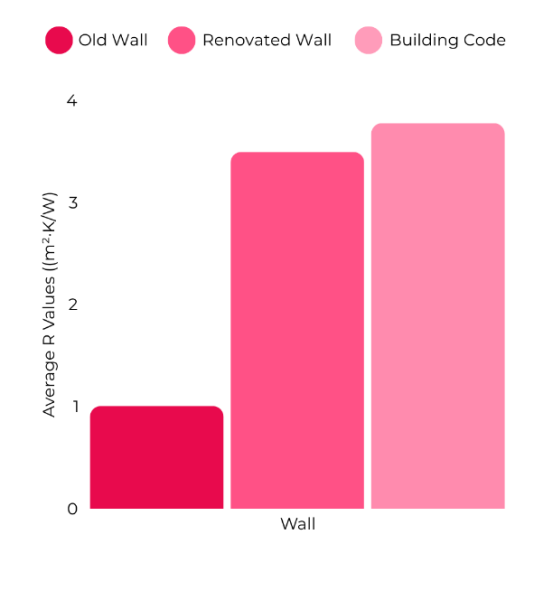
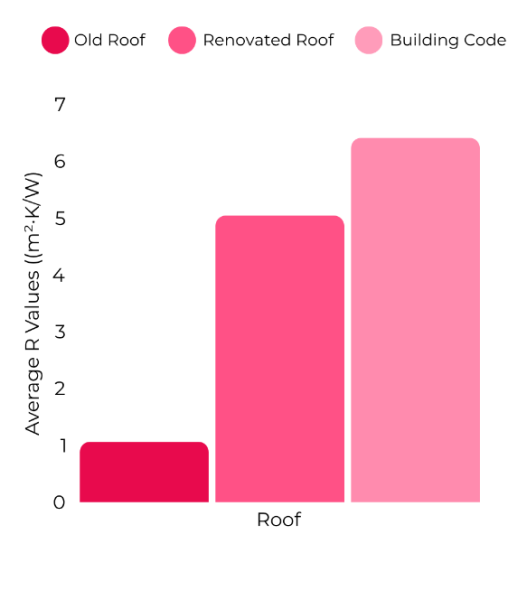
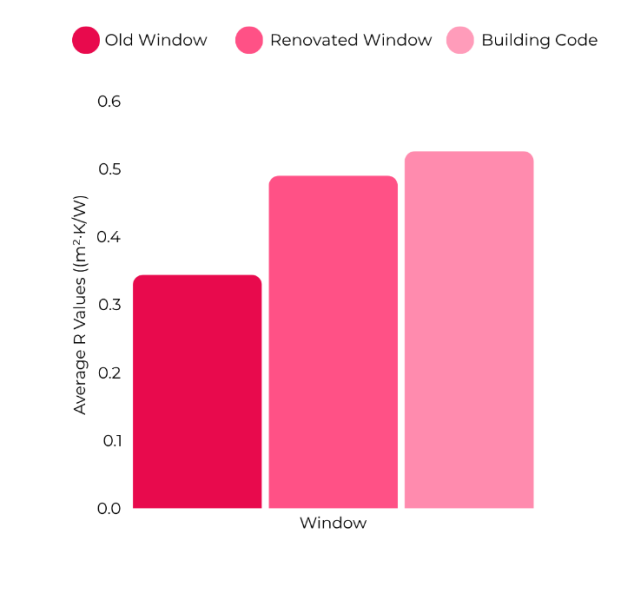
Comparison of Unrenovated Envelope Elements and Renovated Envelope Elements to Building Code

Retrofitted envelope elements perform much more closely to building code guidelines, with the renovated wall performing at 93% of guidelines, the new roof performing at 79% of guidelines, and the retrofitted window performing at 93% of guidelines. Such improvement shows the profitable impact of the retrofits completed.

Building Envelope Improvements: Closer Look

Retrofits made to the renovated hospital wing achieved substantial savings, helping to decrease energy costs for the building. The comparative analysis below shows the improved energy efficiency for a retrofitted window, wall, and roof compared to unrenovated envelope elements.

The retrofitted wall and roof showed the largest improvement, as these elements were the weakest performing prior to renovations. The significant improvement in energy efficiency and reduction in annual costs for the retrofitted building envelope elements validate the Hospital’s investment in envelope upgrades.

Next Steps on the Road to Energy Efficiency

The Hospital was impressed with the precision, accuracy, and detail provided by QEA Tech’s audit. The Hospital is using data from QEA Tech’s analysis to address structural cracks and brick delamination across the envelope. The Hospital is also taking steps to retrofit more of its windows, communicating with one of QEA Tech’s partnered retrofit vendors to implement high-efficiency window inserts. QEA Tech’s AI-powered audit allowed the Hospital to efficiently and accurately assess the impact of the renovations completed as well as pinpoint exact areas across the envelope where additional improvements are required, helping to optimize future retrofit planning.

Interested in assessing the performance of your building envelope? Connect with QEA Tech to receive a free quote for an audit and to learn how our patented AI software can inform your portfolio planning.

Scaling Energy Audits to Support Policy Planning for A Major City

As cities around the globe set decarbonization and net-zero goals to address the severe effects of climate change, ensuring energy efficient buildings is becoming an increasingly important priority for cities. Considering high-performing envelopes are the most effective way to reduce the thermal needs of buildings, understanding the energy usage and savings opportunities related to building envelopes is essential for cities in achieving their sustainability goals.

As such, a major capital city sought QEA Tech’s services to accelerate its ambitious energy transition strategy. Specifically, the City needed QEA Tech to validate assumptions it had made regarding the energy efficiency of its buildings. Aiming to reduce greenhouse gas emissions to zero by 2050, through key actions such as retrofitting existing residential and commercial buildings, QEA Tech’s analysis was necessary for the City to gain a clear understanding of the energy performance of its buildings. This analysis was also essential to tailoring retrofit programs and policies to meet the specific needs of the City’s built environment. QEA Tech collected thermal and visual data for the buildings identified by the City, then analyzed and compared the data to the City’s energy assumptions and targets.

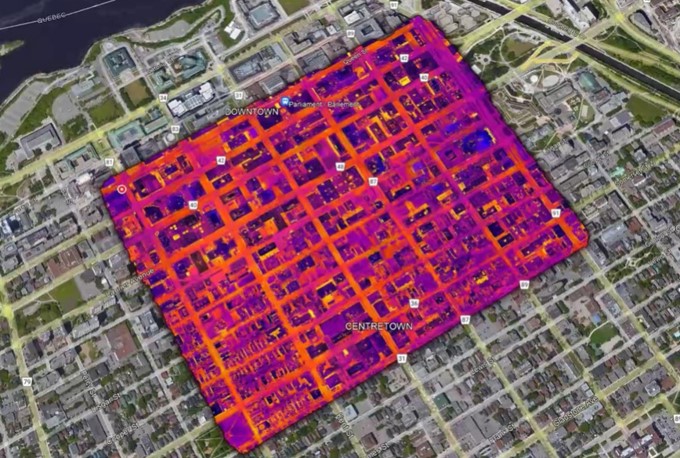
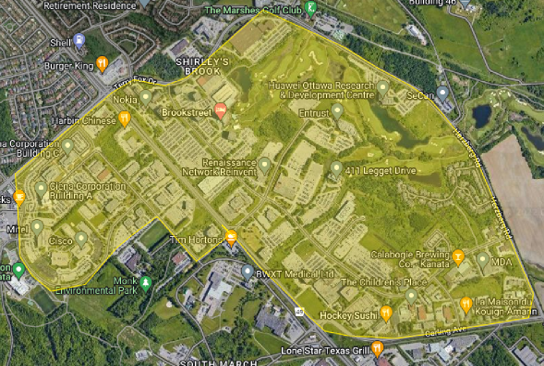
QEA Tech conducted audits for 190 buildings, ranging from commercial to residential properties, within two large catchment areas. QEA Tech captured over 16,000 images in total, which our AI-powered software and team of building science specialists then analyzed. The scope of the analysis consisted of:

1. Number and percent of buildings considered to have major issues associated with their building envelope.

2. Number and percent of buildings with evidence of water ingress.

3. Average energy loss per meter square per building envelope.

4. Energy savings potential and GHG savings potential per square meter of building envelope element.

5. Identification of major patterns and trends in building envelope performance that need to be investigated further.

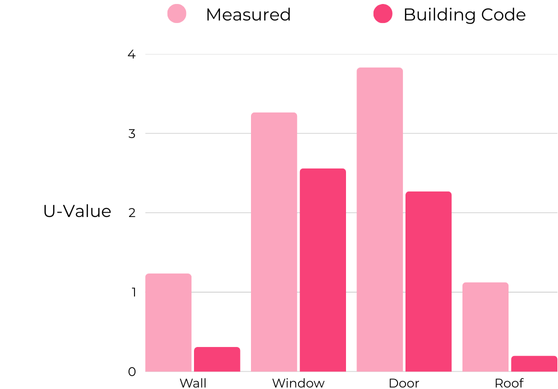
6. Average effective U-value for building envelope elements compared to the City’s energy assumptions and targets.

Thermal map of the first catchment area
 Façade scanning operation of the second catchment area

Key Findings: The Reality of Building Envelope Performance Across the City

QEA Tech’s audit of the two catchment areas found the City’s assumptions on the energy performance of its building envelopes to be more optimistic than the reality. QEA Tech’s audit revealed that:

1. 56% of average annual energy loss in megawatt-hours per meter squared (MWh/m2) from all building envelope elements can be avoided by upgrading building envelopes to building code.

2. 97% of buildings assessed across the two catchment areas did not meet the City’s initial performance assumptions.

3. 68-1123 tonnes of carbon dioxide equivalent (tCO2e) are avoidable annually per building.

4. 64% of the buildings assessed showed signs of water ingress.

Average U-Values (W/m2k) of Building Elements Compared to Building Code

QEA Tech found that the average building envelopes were performing 75% worse compared to current building code. Additionally, the City had assumed building envelope U-values were performing 50% better than the actuals measured by QEA Tech.

QEA Tech’s ability to calculate accurate and precise U-values for the building envelope enabled the City to have a clearer understanding on the actual performance of its buildings, allowing it to better plan energy efficiency measures.

Performance Trends and Patterns Across Building Envelopes

Occurrences of Building Envelope Issues

QEA Tech provided customized reports that identified issues specific to every building envelope for each of the 190 buildings in-scope of this engagement. Further, QEA Tech analyzed data across the 190 buildings to identify key trends and patterns in building envelope performance, supporting city benchmarking and policy planning. QEA Tech found that:

1. Building envelopes in the second catchment area performed slightly better than buildings in the first catchment area. The younger age of the buildings in the second catchment area are likely a contributing factor to their more efficient performance.

2. Key issues across building envelopes were heat loss due to connections between different materials, thermal bridging, inconsistent or decay of insulation, heat loss through doors and frames, and moisture accumulation.

3. Moisture accumulation issues were more common in buildings in the first catchment area and were more common in older buildings.

Building Envelope Issues: Closer Look

Heat Loss through Frames and IGUs

A staggering 158 of the buildings analyzed had instances of heat loss through window frames and insulated glass units (IGUs). Heat loss through IGUs occurs due to window assemblies failing to maintain an effective thermal barrier, allowing heating and cooling to escape from the building. This could be a result of seals between panes of glass degrading and allowing insulting gas to escape and moisture to enter, or inadequate window glazing. Heat loss through window frames often occurs due to frames being made from highly conductive materials (e.g. aluminum), allowing heat to easily transfer between the inside and outside of the building. Additionally, when frames are not sealed properly against the wall, it can lead to gaps that allow heat to escape.

For several instances, to mitigate heat loss through IGUs, building owners can implement window inserts, which are customized glass panes that can be placed on the inside or outside of the existing window. This creates a new thermal boundary that improves U-values. Window inserts are ideal for buildings throughout the two catchment areas that are interested in preserving their original frames for historical or aesthetic reasons, that are working with a constrained timeline and budget, or that want to maintain their window’s original size and operating style. Window inserts work best with structurally sound wood or aluminum frames. To decrease energy loss from uninsulated framing, energy efficient frames (e.g. vinyl frames) with improved glazing should be implemented.

Inconsistent and Decay of Insulation

QEA Tech identified instances of inconsistent and decay of insulation for 126 of the buildings analyzed. When insulation is poorly installed or compromised over time, it can lead to gaps that allow heating or cooling to escape, causing energy costs to increase. Considering the older ages of the buildings audited, it is also likely that insulation of most buildings settled, compressed, or degraded over time, leading to reduced effectiveness. Areas with inconsistent or decaying insulation contribute to drafts, cold spots, and moisture issues, causing tenant discomfort and further degrading building materials.

Depending on the building usage and architecture, interior insulation (e.g. Batt insulation) should be applied or recladding should be completed. Interior insulation is best to use for buildings that have a smaller budget and that are interested in maintaining their outward appearance. Recladding is optimal if the operations of the building cannot be disrupted (e.g. for hospitals).

A More Effective Path to Energy Transition

QEA Tech’s usage of our patented AI software and drones enabled us to collect and analyze building envelope data quickly, cost-effectively, and without disturbing city residents and building owners. Our technology also allowed our audit to be scalable, a necessity when collecting and analyzing data for large city blocks. QEA Tech’s efficient, detailed, and precise approach has provided the City with a clear picture of the energy performance of its building stock, allowing it to take informed action. The City now has accurate data to enhance its energy transition strategy to fit the actual needs of its building envelopes. Further, the City is able to tailor its programs and policies to make retrofits more accessible for building owners and maximize their return on investment. As an interim step, the City has published the energy performance of each building analyzed.

If you are interested in gaining a deeper understanding of the energy efficiency of building envelopes in your portfolio, connect with QEA Tech for a free quote.

Analyzing Energy Loss Across a Hospital Campus

QEA Tech completed detailed building envelope energy audits for a world-renowned hospital based in the US. The Hospital has numerous properties across a large dense city, provides a wide range of healthcare services, and includes a Level I trauma center. QEA Tech completed audits for 12 of the Hospital’s buildings, spanning multiple city blocks.

The Hospital enlisted QEA Tech’s services as it lacked the data it needed to integrate the building envelope into its decarbonization plan. The Hospital was motivated to enact decarbonization measures due to the old age of its buildings and high energy bills. Particularly, the Hospital suspected poor performance of its windows and sought data on their actual U-values. QEA Tech was selected as we provide detailed and actionable insights, which was optimal for the large size and number of the Hospital campus’s buildings.

Operations

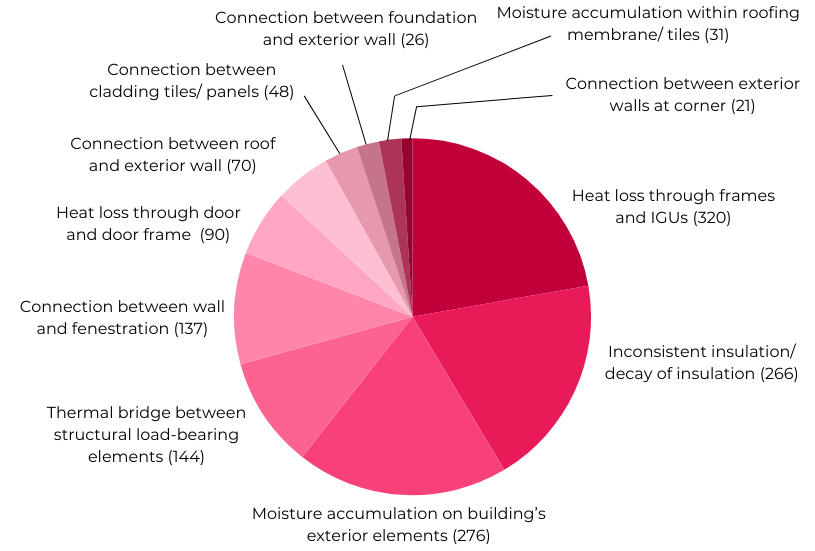
QEA Tech’s drone operations spanned approximately 860,000 square feet with data being collected within 7 days. QEA Tech’s operations had to be efficient and non-intrusive to not disturb 24/7 hospital operations. The data collected was processed and analyzed by our AI-powered proprietary software, calculating the energy loss, greenhouse gas emissions, potential energy and greenhouse gas emissions savings, and actual effective U-values/ R-values for each building envelope element. Additionally, QEA Tech identified over 4800 issues related to the Hospital’s building envelopes, such as heat loss through connections of building envelope elements, thermal bridging, and heat loss through the window frame.

Key Findings

Through our audit, QEA Tech found that:

1. 62% of annual building envelope energy loss in megawatt-hours (MWh) can be avoided by upgrading the envelopes to building code.

2. >$850,000 in annual energy expenditures can be saved by upgrading building envelopes to building code.

3. 1451 tons of carbon dioxide equivalent (tCO2e) are avoidable annually by upgrading building envelopes to building code.

4. The average payback period to recoup costs of all the retrofits recommended in our audit is 7 years.

Total % of Energy Loss (MWh) from Each Building Envelope Element
Graph Insights

Heat loss due to connections of building envelope elements: Due to the old age of the Hospital campus’s buildings, this is likely caused by connections of building envelope elements not being continuously insulated or thermal layers decaying over time. Degradation of materials over time can lead to cracks or openings between building envelope elements, further increasing energy loss.

Inconsistent, decay of, or no insulation: Age and moisture accumulation throughout the building envelope has likely caused the insulation of the Hospital’s buildings to deteriorate, leading to reduced R-values and effectiveness.

Thermal bridging: As buildings age, settling and material degradation can lead to cracks or openings at junctions, amplifying thermal bridging issues. Thermal bridges occur when a more conductive material creates a direct pathway for heat transfer across less conductive areas of the building envelope, increasing energy loss.

Top Issues

Poorly Performing Windows

The average U-values calculated for the majority of the Hospital’s windows were performing significantly below building code, resulting in over $500,000 of annual heating and cooling loss attributed to windows. Some windows in the Hospital displayed heat loss through insulated glass units (IGUs), losing insulating gas fill due to failing seals.

QEA Tech recommended that the Hospital apply window inserts for the poorly performing windows identified by QEA Tech. These inserts are customized glass panes that can be placed on the inside or outside of the existing window. This creates a new thermal boundary that improves U-values while minimizing disruptions to hospital operations and patient care. Further, these inserts are more cost effective than traditional window replacement and take a fraction of the time to implement. The total potential energy savings of implementing this retrofit for the Hospital amounts to 7527 MWh. It will take approximately 10 years to recoup the costs of performing this retrofit.

Moisture Accumulation within Roofing Membrane and Tiles

Moisture accumulation on the Hospital’s roofs was likely caused by poorly ventilated roofing systems resulting in condensation beneath the roofing membrane and stagnant water from rainfall that was not properly drained. This is a significant issue as water trapped beneath the roofing membrane creates an environment for mold growth, rot, and deterioration of roofing material, negatively affecting the health of the Hospital’s occupants.

To address this issue, it is recommended that the drainage systems on the roof are regularly inspected and cleaned. In addition, the damaged areas of the roof should be remediated by applying an insulation layer and a durable roof membrane (e.g. bitumen layer). Lastly, the roof should be sealed against potential leaks. This approach is designed to provide the Hospital with a roof expected to last an additional 15-20 years, addressing existing leaks and other roofing issues. Moreover, this method is more cost-effective than a full roof replacement and better meets the needs of the Hospital by allowing it to remain fully operational during the renovation.