QEA’s Roof Assure Audit – Protect Your Roof, Protect Your Bottom Line

QEA is excited to announce the latest addition to our market leading, AI-powered building envelope assessment services – QEA’s Roof Assure Audit. Leveraging sophisticated AI models, thermography, and industrial drones, QEA’s Roof Assure Audit provides the precise insights needed for building owners to address issues before they grow into costly problems.

QEA’s Roof Assure Audit incorporates several proprietary innovations to tackle the essential aspects of managing your roof.  The Roof Assure Audit:

1. Pinpoints physical issues, risks, and deficiencies throughout the roof (e.g. moisture penetration, wet insulation, corrosion, blisters, debris) down to inches or centimeters.

2. Accurately measures megawatt-hours (MWh) of energy loss, tons of carbon emissions, forecasted energy and emissions savings, and the effective R-value for each square inch or centimeter of the roof.

3. Provides customized retrofit plans that detail a cost-benefit analysis for various roofing solutions, with each plan tailored to maximize ROI.

QEA’s Roof Assure Audit is backed by robust AI models trained on hundreds of thousands of high-resolution (8k+), high proximity, annotated thermal and visual images of roofs. This ensures the highest levels of accuracy, precision, and speed in analysis. Our extensive database is built on over 1,100 projects completed for a diverse portfolio of commercial, residential, institutional, and industrial buildings, ensuring optimal accuracy in analysis.

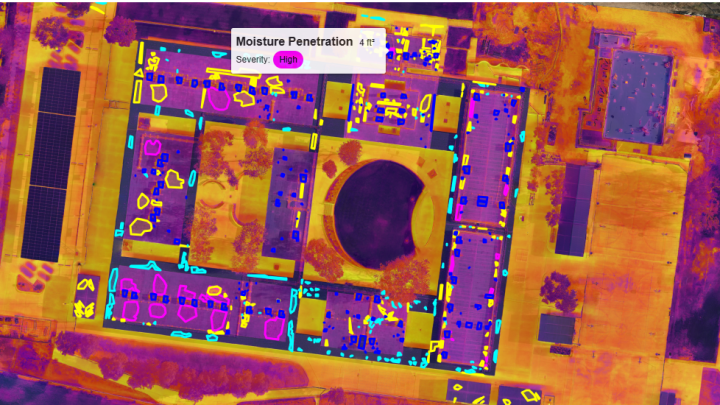
The Roof Assure Audit begins with comprehensive data collection using industrial drones and QEA’s proprietary sensors. Once data is collected, QEA’s AI models and team of building science specialists diagnose various roofing issues and risks and present solutions that optimize ROI. The Roof Assure Audit delves deeper than traditional audits by detailing severity, square footage, and material impacted by each issue. All of this information is presented on a high-quality, digital twin of the roof, creating an intuitive visual model of roof performance.
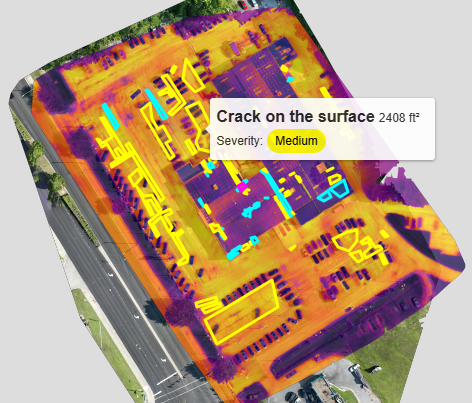
Example of a digital twin of the roof which includes a thermal overlay and markers identifying key roofing issues. For each issue size and severity are detailed.

QEA’s Roof Assure Audit delivers custom retrofit solutions tailored to the needs of each roof. Each solution includes details on implementation costs, forecasted energy savings (MWh), and payback periods. Building owners can quickly understand optimal retrofit decisions, such as whether targeted repairs or a full roof replacement delivers a better ROI. Through QEA’s expansive network of roofing solutions partners, we ensure accurate costing information and can facilitate retrofit implementations, streamlining the entire retrofit process.

QEA’s Roof Assure Audit delivers an unmatched level of precision, accuracy, and detail, empowering building owners to establish strong business cases needed to justify roofing retrofits. With hundreds of successful deployments across multiple countries, QEA’s Roof Assure Audit is helping building owners understand the lifespan of their roof, mitigate roofing risks, prioritize repairs and retrofits based on necessity and ROI, and ensure compliance with roofing regulations.

Contact Us today to maximize the lifespan of your roof with data-backed and ROI-driven insights.

The Value of Roof Audits: Data-Driven Insights to Maximize ROI

The roof is one of the most critical components of a building; acting as an essential protective barrier and determinant of energy efficiency. As such, roof resiliency must be a core maintenance and risk management priority for all building types.

The Case for Resilient Roofs

From cracked surfaces and insulation decay to moisture penetration and metal corrosion, roofs can accumulate a variety of damaging issues over time. Left unchecked, these issues can lead to costly emergency repairs, steep insurance premiums, and shorter roof lifespans.

Regulation related to roofing upgrades underscores the need to improve the resiliency of roofs. For example, Florida Building Code 25%, sets strict rules that require roofs that have sustained damage to 25% or more of the roof to be repaired or replaced in its entirety.

Enabling Resiliency Through Regular Roofing Audits

Recurring roof audits help building owners avoid costly retrofit expenses by identifying problems in the roof early on, allowing for targeted retrofits that are a fraction of the cost of a full roof replacement. Roof audits evaluate important issues like:

Moisture penetration – Occurs when water seeps through cracks, seams, or damaged roofing materials, often due to aging, poor drainage, or ponding water. This can lead to insulation saturation, structural damage, and mold growth.

Surface cracks – Due to structural or environmental factors that cause roofing materials to fracture, potentially leading to water penetration, air leakage, and compromising of the thermal and structural integrity of the building.

Delamination – Characterized by the separation of layers in materials, often resulting from moisture infiltration, temperature fluctuations, or poor adhesion during installation. As layers begin to detach, the roof becomes more susceptible to air and water leaks, energy loss, and damage to underlying materials.

Air leakage – Due to uncontrolled air infiltrating or escaping through openings in the roof, reducing energy efficiency, increasing costs, and negatively affecting indoor comfort.

Inconsistent or decaying insulation – Characterized by poorly installed or compromised insulation, that allows heat to escape in winter and enter during summer. This leads to increased costs and contributes to drafts, cold spots, and moisture issues.

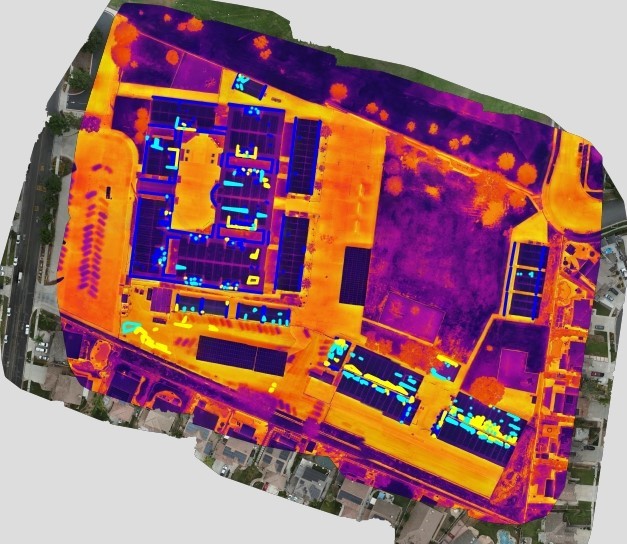
Digital twin of a roof from an audit completed by QEA Tech. The digital twin has a thermal overlay with polygons identifying key roofing issues. Issues are categorized by severity and square footage. 

Leveraging detailed insights from roof audits, building owners can proactively manage roof health, enabling them to:

Build Resiliency and Manage Costs A detailed roof audit enables targeted repairs that address roof issues and risks while maximizing ROI. Further, regular assessments can determine the progression of roofing issues, providing insights on if they are worsening over time and the risks this can pose.

Optimize the Lifespan of the Roof – Regular audits enable building owners to evaluate the state of roofing materials, equipping them with the tools to make informed maintenance decisions and avoid costly emergency repairs or replacements.

Boost Energy Efficiency  By determining areas and causes of energy loss, building owners can implement high-impact, cost-effective retrofits such as adding:

1. Energy efficient insulation in areas with gaps or decaying insulation

2. Sealants or flashing tape to address air leakage from skylights

3. Sealants to protect against potential water leaks and moisture penetration

4. Waterproof roofing membranes such as bitumen to protect against weather elements

5. Reflective roof coatings to help deflect solar heat and reduce cooling loads

QEA Tech’s detailed, data-driven roofing audits help building owners create robust business cases to realize these benefits. This can be seen through an audit QEA Tech completed for a large warehouse. QEA Tech provided the client with important quantified insights, such as the roof being responsible for over $347,000 USD in annual energy loss and performing at only 50% of building code standards. QEA Tech then delivered high-impact retrofit recommendations, such as using silicone sealants to address air leakage from skylights (3-month payback period). The client is now working with one of our partnered roofing solutions providers to implement cost-effective retrofits.

QEA Tech has provided several other clients with the data they needed to improve their roof. For example, leveraging insights from our audit, a large commercial building replaced its gravel roof with the more energy efficient choice of rigid insulation. In a post-retrofit verification audit QEA Tech completed, it was found that 78% of annual energy loss in megawatt-hours from the roof was saved and previous roofing issues such as an inconsistent thermal layer were no longer present.

How QEA Tech is Scaling Up Roof Resiliency

QEA Tech has a strong record of aiding building owners identify the most cost-effective ways to address roofing issues.
We have pioneered proprietary AI software that pinpoints and evaluates the severity of various roofing issues. Additionally, QEA Tech’s software accurately measures megawatt-hours of energy loss, tons of carbon dioxide equivalent, and the actual effective R value for each square inch of the roof. As a result, we are able to recommend customized retrofits, detailing implementation costs, forecasted energy savings, and ROI. By incorporating patented quantification methods, a comprehensive dataset on the thermal performance of roofs, and exact architectural and energy data for the building, QEA Tech is able to provide unmatched accuracy and precision.

Contact QEA Tech today to gain detailed insights on your roof, taking the first step needed to build resiliency and efficiency across your building portfolio.

Roofing Retrofits: Solving Moisture Penetration and Enhancing Energy Efficiency

The roof is critical in protecting buildings from weather elements, improving the energy efficiency of buildings, and maintaining occupant comfort. In a recent commercial property that QEA Tech analyzed, a comprehensive roofing retrofit was completed to address multiple leaks. The building includes office space at the front and a warehouse at the back.

Causes of the Leaking Roof

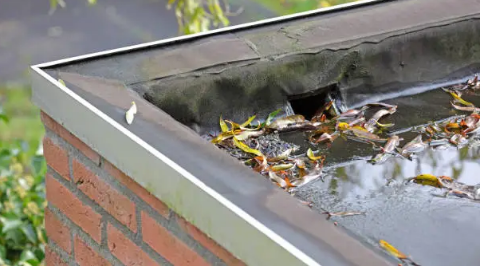
The leakage was largely caused by water accumulating on the roof of the building due to blocked drainage systems. This was a result of improper roof maintenance, causing debris to collect on the roof and trap moisture which eventually penetrated through roofing materials. Additional factors that contributed to moisture penetration of roofing materials include:

1. The old age of the building, which resulted in the deterioration of roofing materials and sealants.

2. Cold weather causing water that has seeped into the roofing membrane to freeze and expand, exerting pressure on building materials and leading to the creation of small gaps. These gaps create additional paths for moisture to enter the building.

3. Improperly sealed solar panels on the roof which allowed water to seep into the building.

Retrofitting a Leaky Roof

To address this pressing issue, a thorough roofing retrofit was completed within 4 weeks. The retrofit consisted of:

1. Removing the existing, worn-out roof membrane.

2. Installing a multi-layer system:

Insulation layer: Firstly, an insulation layer was added to retain heat within the building and improve energy efficiency.
Weather barrier: A weather barrier was added to protect the insulation, prohibiting water from penetrating through to the insulation.
Protective tar layer: A tar layer was added using heat to ensure it melted and adhered properly. This layer was added to provide an additional barrier against water.
Bitumen layer: Bitumen was added, acting as a final layer of robust protection against weather elements like rain and snow.

Benefits of the Retrofit

Since the retrofit was completed, utility bills for the building decreased by over 10% annualized. This retrofit will increase the lifespan of the building’s roof, with the layers added shielding it properly from weather elements. Increasing the lifespan of the roof also reduces costs in the long run by reducing the frequency in which roofing materials need to be replaced.

Signs Your Roof Needs a Retrofit

To mitigate moisture-related roof issues, building owners should remain vigilant for signs of:

Moisture penetration on the roofing tiles: In late stages where the issue has progressed to greater severity, this can be identified by water spots on the ceiling. This requires immediate action as the longer the water sits and pools, the more damage it will do to the building. Water spots on the ceiling were the main sign that the roof of the commercial building retrofitted was not in good shape to prevent leaks from occurring.

Mold and mildew: Mold or mildew can be a sign of water that has become trapped beneath the roofing membrane and requires immediate action in order to maintain occupant health and safety.

Using AI and thermography, moisture-related issues on the roof can be detected early on before they develop into expensive problems.

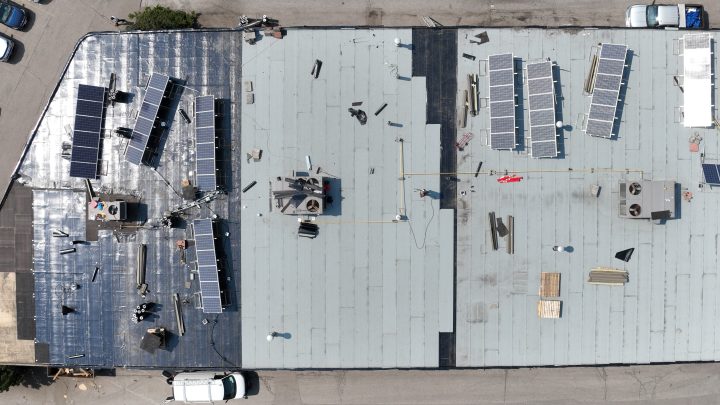
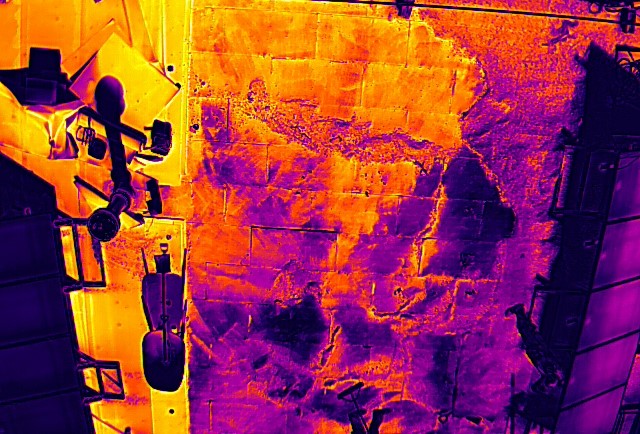
Thermal image taken of the roof prior to retrofits.

Preventive Measures

All building types can take the following measures to prevent moisture-related issues on the roof:

Regular Inspection and Maintenance: Conduct regular inspections of the roof to identify signs of moisture accumulation, damaged tiles or shingles, or vegetation growth, and to ensure drainage systems are not blocked. Using thermography and AI analytics, QEA Tech can efficiently and cost-effectively diagnose moisture-related issues on the roof, providing insight on the severity of the issue and how to repair it.

Enhance Airflow: Install ridge vents, soffit vents, or other ventilation solutions to improve air circulation and reduce moisture buildup beneath roofing materials.

Apply roof coatings: Use roof coatings, such as silicone coatings, to create a waterproof barrier on the roof that prevents moisture from seeping through roofing materials.

Insulation: Ensuring your roof is well-insulated helps reduce moisture penetration, especially in colder climates where condensation is more likely to occur.

Qualified building envelope auditors, like QEA Tech, are an important first step in understanding the state of your building’s roof and what actions to take to fix moisture and energy efficiency issues. Contact QEA Tech today for a free quote on a building envelope audit.