
- Measurable 3D Models
- Retrofit Plans
Maximizing Hotel Occupancy and Revenues by Improving Building Envelope Performance

Savings in Annual Envelope Energy Loss
Reduction in Annual Envelope Emissions
Savings in Annual Roof Energy Loss
Hotels have no down-time, accommodating a steady stream of guests twenty-four hours a day, seven days a week, year-round. Throughout these constant operations, keeping expenses contained while maintaining brand reputation is of utmost importance. Maintaining a high-performing building envelope is key to ensuring these goals are met. An optimized building envelope:
Lowers Energy Costs
A high-performing envelope avoids common energy efficiency issues hotels face such as lobby drafts and overheating on upper floors. An air tight envelope ensures that HVAC systems can better meet the individual temperature needs of each guest room rather than strain to compensate for envelope energy inefficiencies. This in turn allows for lower heating and cooling costs.
Guarantees Guest Comfort
A properly maintained envelope allows for consistent room temperatures and avoids noise complaints caused by HVAC unit strain.
Avoids Moisture
By nature, hotels generate high levels of humidity due to showers in every room, pools, spas, laundry facilities, and kitchens. A properly designed envelope helps to prevent moisture accumulation, ensuring that hotels avoid the risk of mold growth and maintain high-performing insulation and air quality.
Maintains Aesthetics
Avoiding moisture is not only essential to occupant health, it prevents instances like water staining and peeling paint which risk hotel appearance and brand reputation. Importantly, it also prevents safety hazards and liabilities such as spalling and structural cracks.
A Landmark Hotel Experiencing Declines in Comfort and Capital
A prominent hotel complex in Texas, consisting of over 1000 rooms, was facing issues cooling its upper floors. In the intense Texas heat, the building’s HVAC systems could not keep pace, hiking energy bills and severely compromising guest comfort. Additionally, the Hotel risked millions of dollars in revenue loss annually due to the inability to rent out these upper-floor rooms as a result of excessive heat. Wanting to avoid revenue loss and maintain an optimal guest experience, this global hospitality brand turned to QEA for guidance.
To solve a problem of this scale without disrupting ongoing operations, the Hotel required an innovative approach. QEA deployed its patented AI software, drones, advanced thermography and sensors to:
1. Capture 3500+ high-resolution, close-proximity thermal and visual images of the envelope and thousands of additional building data points in under 24 hours
2. Pinpoint and quantify envelope deficiencies contributing to heating and cooling issues
3. Deliver a tailored retrofit plan to cost-effectively address this pressing issue
Assessing Envelope Energy Efficiency
By implementing QEA’s recommended retrofits to bring the envelope beyond building code, the Hotel can unlock massive savings, including:
1. 46% savings in annual envelope energy loss
2. 61% reduction in annual carbon emissions from the envelope
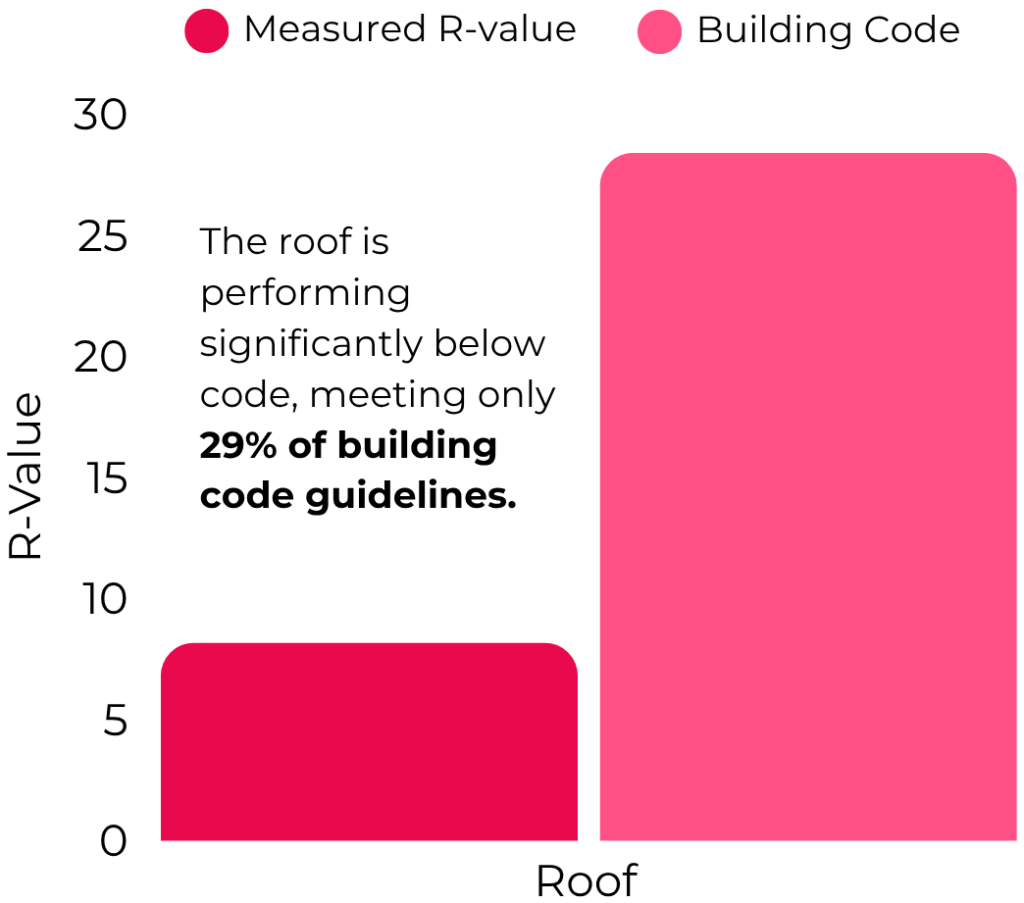
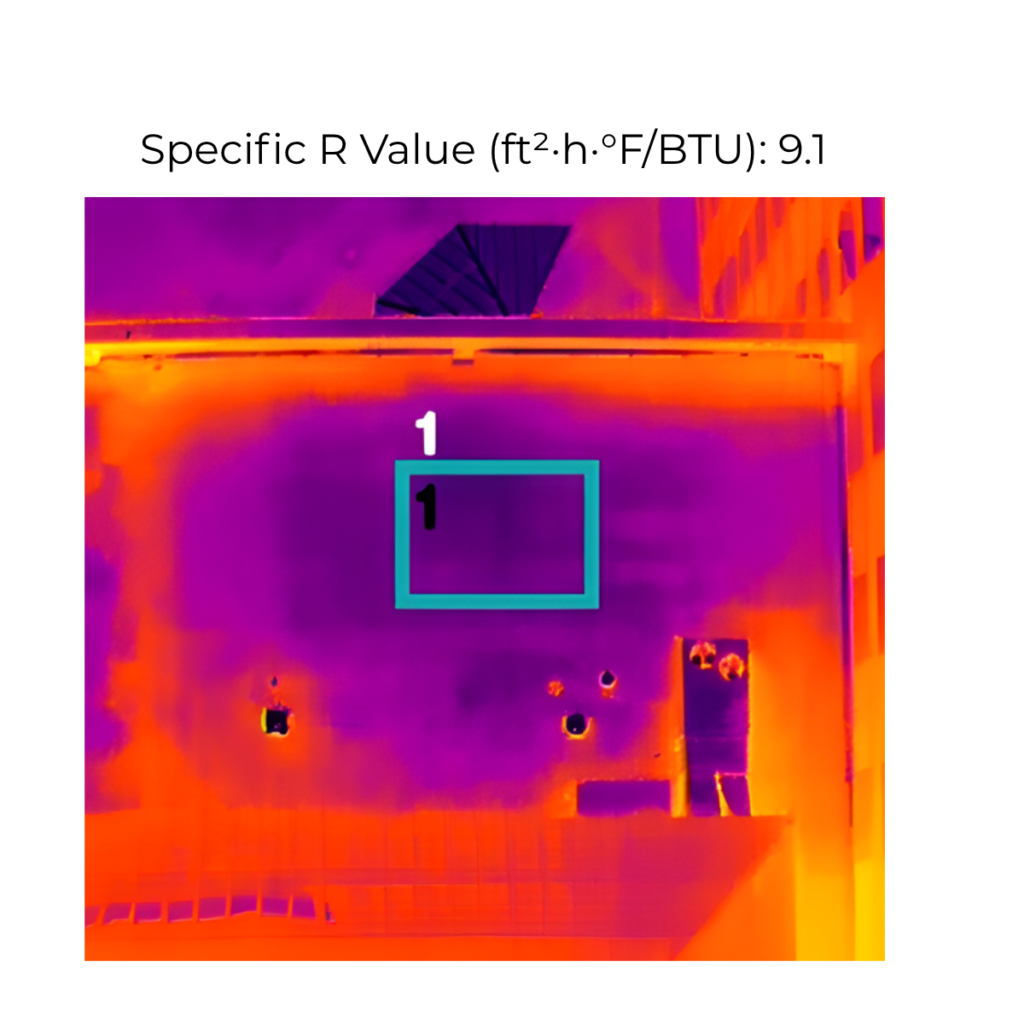
QEA’s analysis revealed the roof as a key source of energy loss, with potential for the roof to save 75% of its annual energy loss. QEA measured the effective R-value of the roof to quantify the severity of energy loss:
Average R-Values (ft²·h·°F/BTU) of the Roof Compared to Code
Diagnosing the Root Causes: Top 3 Envelope Issues
Decaying and Missing Insulation on the Roof
Impact: Several instances of decaying and missing insulation across the roof resulted in significant heat transfer. This contributed to the Hotel’s mechanical systems having to work overtime to condition spaces, driving up energy costs.
QEA Action Plan: QEA recommended applying spray foam insulation to the roof. Adding insulation to the roof will minimize solar load, preventing additional heat from entering the building. Spray foam insulation in particular was chosen as it provides a fully adhered air barrier and thermal insulation. Additionally, it’s superior yield compared to other insulation solutions reduces the cost and amount of material required. Compared to other solutions such as rigid insulation, spray foam insulation had the best lifespan, allowing for a better ROI in the long run.
Poor Performing Windows
Impact: The Hotel had outdated single pane windows, allowing for unwanted heat to more easily enter during warm weather, resulting in higher energy bills.
QEA Action Plan: QEA provided two non-disruptive solutions that can work together to improve energy efficiency:
Window Inserts: These are custom glass panes that are installed on the window internally or externally, creating a new thermal boundary that improves U-values. This solution offered implementation costs up to 61% cheaper than full window replacements.
Window Films: These are polyester film construction applied to the interior surfaces of a window, reducing hot spots and ensuring conditioned air stays inside the building. Certain window inserts can be tinted to behave like window films so that films do not have to be applied.
Both solutions minimize disruption to operations compared to traditional window replacement. Implementing retrofits can allow the Hotel to eliminate up to 39% of annual window energy loss.
Moisture Accumulation within the Roofing Membrane
Impact: QEA’s analysis identified 1,679 square feet of moisture accumulation. Moisture trapped beneath the roofing membrane deteriorates roofing materials, compromising the structural integrity of the roof and reducing roof lifespan. It also can result in occupancy issues such as mold growth and water stains.
QEA Action Plan: QEA recommended a targeted remediation strategy:
1. Remove the ballast from the roof and specific areas of insulation affected by moisture.
2. Install high-quality insulation. QEA recommended spray foam insulation due to its ability to form a continuous thermal and vapor barrier.
3. Apply a durable roof membrane to serve as a protective barrier against weather elements and ensure that connections are sealed to prevent leaks. QEA recommended a TPO membrane due to its ease of installation and ability to protect from UV exposure, rain, and wind.
This approach extends the roof’s lifespan and, crucially, allows the Hotel to remain largely operational during the renovation, averting potential revenue loss.
Stop Guessing, Start Saving: The QEA Difference
By turning high-quality building envelope data into an actionable, cost-effective retrofit plan, QEA provided a blueprint to recapture millions in annual revenue, maximize asset longevity, and ensure optimal guest comfort.
QEA is an industry leader in providing precise and actionable building envelope analytics. Interested in getting a better understanding of envelope performance across your portfolio? Contact us today for a free quote.
Get Our
Latest Updates